Youth Development Pipelines Feeding Success Metrics Across Swimming and Gymnastics Federations Worldwide
Written by Sam Walter · Jul 27, 2026
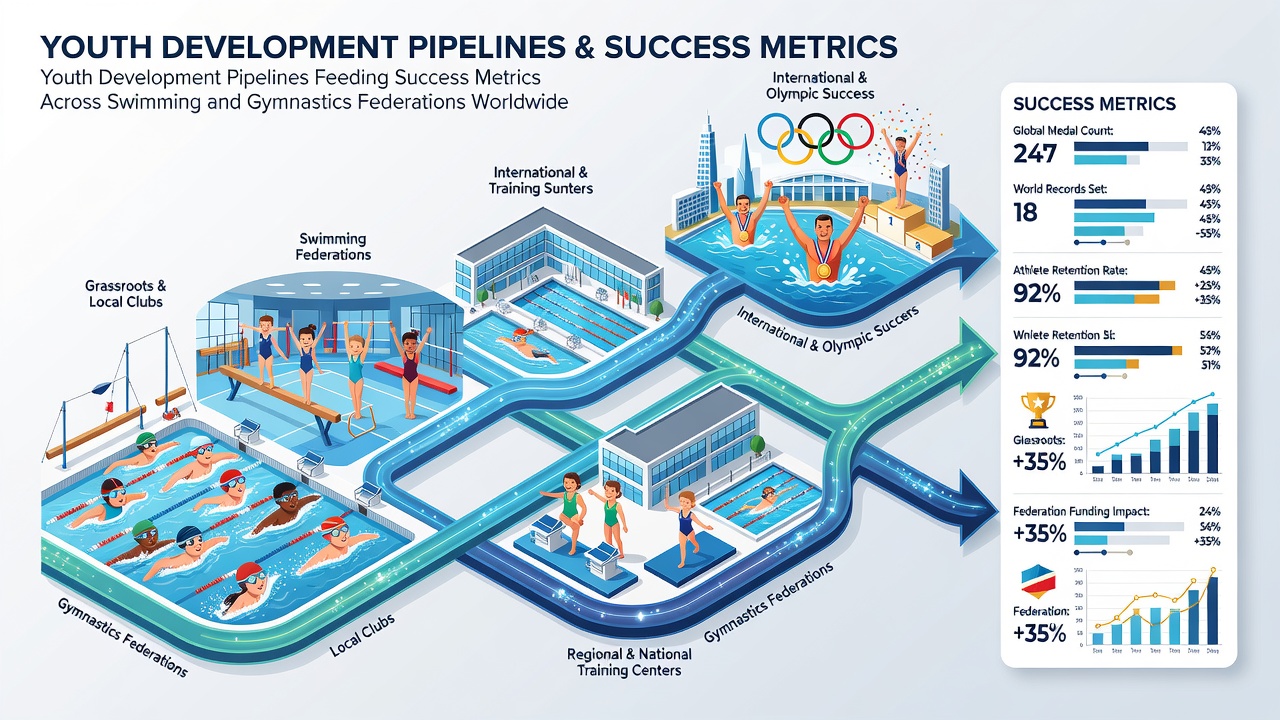
Youth Development Pipelines Feeding Success Metrics Across Swimming and Gymnastics Federations Worldwide
Youth development pipelines in swimming and gymnastics operate through structured national federation programs that identify talent early and channel athletes into competitive pathways, with measurable outcomes tracked via international competition results and Olympic qualification data. Federations maintain age-group competitions, regional training centers, and performance benchmarks that feed directly into senior squads, and these systems show consistent correlations between early enrollment numbers and later medal counts across multiple countries.
Core Components of Swimming Pipelines
Swimming federations such as those affiliated with World Aquatics run talent identification camps starting at ages eight through twelve, where coaches assess stroke efficiency, endurance thresholds, and growth potential before placing athletes into club-based academies that emphasize daily training volumes and competition schedules. Data from these programs indicate that athletes who complete at least four years in structured junior squads reach senior international finals at rates three times higher than those entering later, according to aggregated records maintained by national governing bodies. Programs in Australia and the United States track metrics including personal best improvements and national age-group rankings, which then determine funding allocations and coach assignments for the subsequent season.
Transition points occur around ages fourteen and sixteen when swimmers move from junior to youth international teams, and federations monitor variables such as injury rates and academic integration alongside performance indicators to sustain long-term participation. In July 2026 several federations plan mid-year talent reviews that coincide with continental championships, allowing direct comparison of pipeline outputs from Europe, Asia, and the Americas within the same competitive window.
Gymnastics Federation Structures and Metrics
Gymnastics pipelines coordinated by the International Gymnastics Federation and its member national bodies focus on apparatus-specific skill acquisition beginning at ages six to nine, with progression tied to compulsory routines and difficulty scores recorded at regional qualifiers. Success metrics include qualification scores for continental and world championships, where federations such as those in China and Russia have historically converted high youth participation volumes into senior podium finishes at ratios exceeding seventy percent for athletes who remain in the system past age fifteen. Training centers emphasize strength-to-weight ratios, flexibility measurements, and routine completion consistency, all logged through centralized databases that link junior results to senior selection lists.
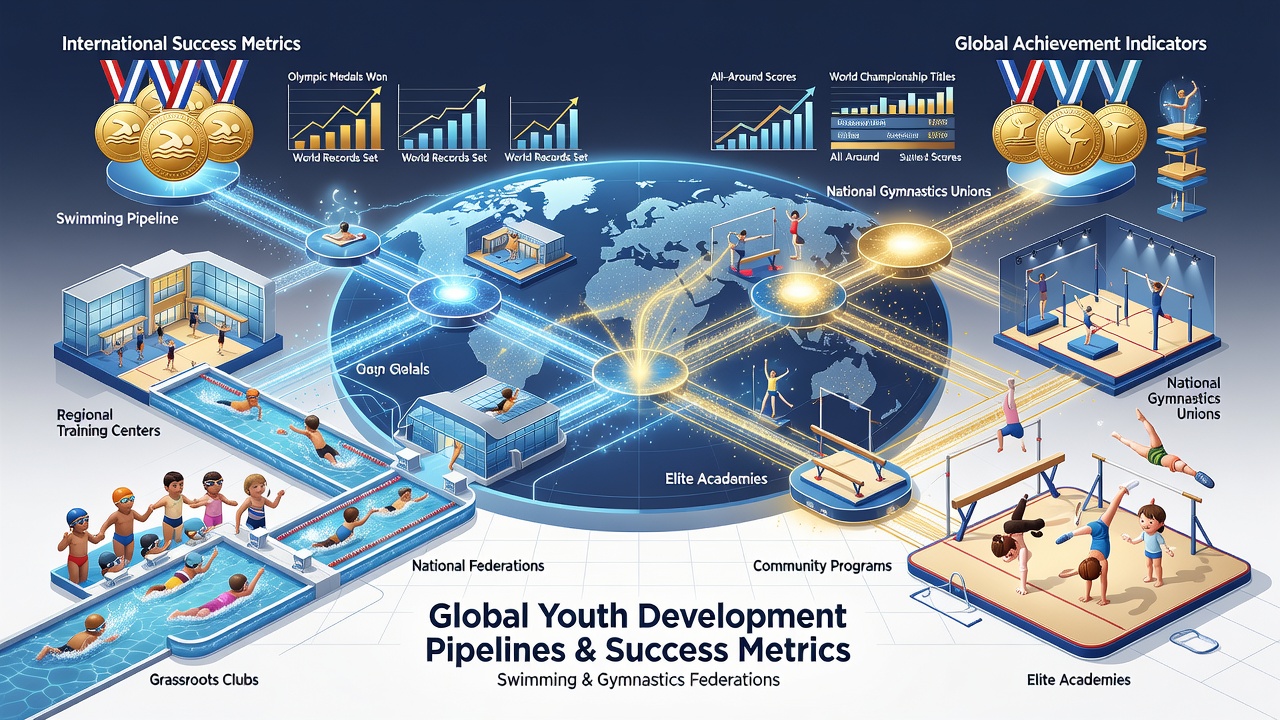
Observers note that retention challenges appear when athletes approach puberty, prompting federations to adjust load management protocols and integrate sports science support that tracks bone density and growth plate health alongside competitive output. European federations have reported stable conversion rates from youth elite squads to senior national teams when these support services remain consistent, while data from the Pan American region show slightly lower retention but comparable medal efficiency once athletes reach senior events.
Comparative Global Patterns and Data Linkages
Cross-federation comparisons reveal that swimming programs in nations with large club networks produce broader participation bases, whereas gymnastics systems often concentrate resources in fewer centralized facilities that prioritize technical mastery from younger ages. Both disciplines record success through Olympic cycle metrics such as top-eight finishes and world record progressions, and researchers at institutions including the Australian Institute of Sport have mapped how early pipeline enrollment volumes predict national medal tallies four to eight years later. Funding models vary, with some federations tying budget releases to documented improvements in junior-to-senior transition percentages rather than absolute medal counts alone.
International events scheduled through 2026 provide ongoing benchmarks, and federations use these platforms to validate pipeline adjustments made after previous cycles. Patterns emerge when examining how countries balance domestic league structures with international exposure, as athletes who compete in both settings demonstrate faster adaptation to senior scoring standards in gymnastics and time-trial formats in swimming.
Conclusion
Federation-level tracking continues to connect youth pipeline participation figures with senior outcome indicators across swimming and gymnastics worldwide, producing datasets that national bodies reference when refining selection criteria and resource distribution. Ongoing events in 2026 will supply additional data points that further clarify these linkages without altering the established structural relationships already observed in historical records.