Tracing Performance Dips Tied to Jet Lag Patterns in Cross-Continental Team Tours and Their Links to League Point Distributions
Written by Otto Baumann · Aug 8, 2026
Tracing Performance Dips Tied to Jet Lag Patterns in Cross-Continental Team Tours and Their Links to League Point Distributions
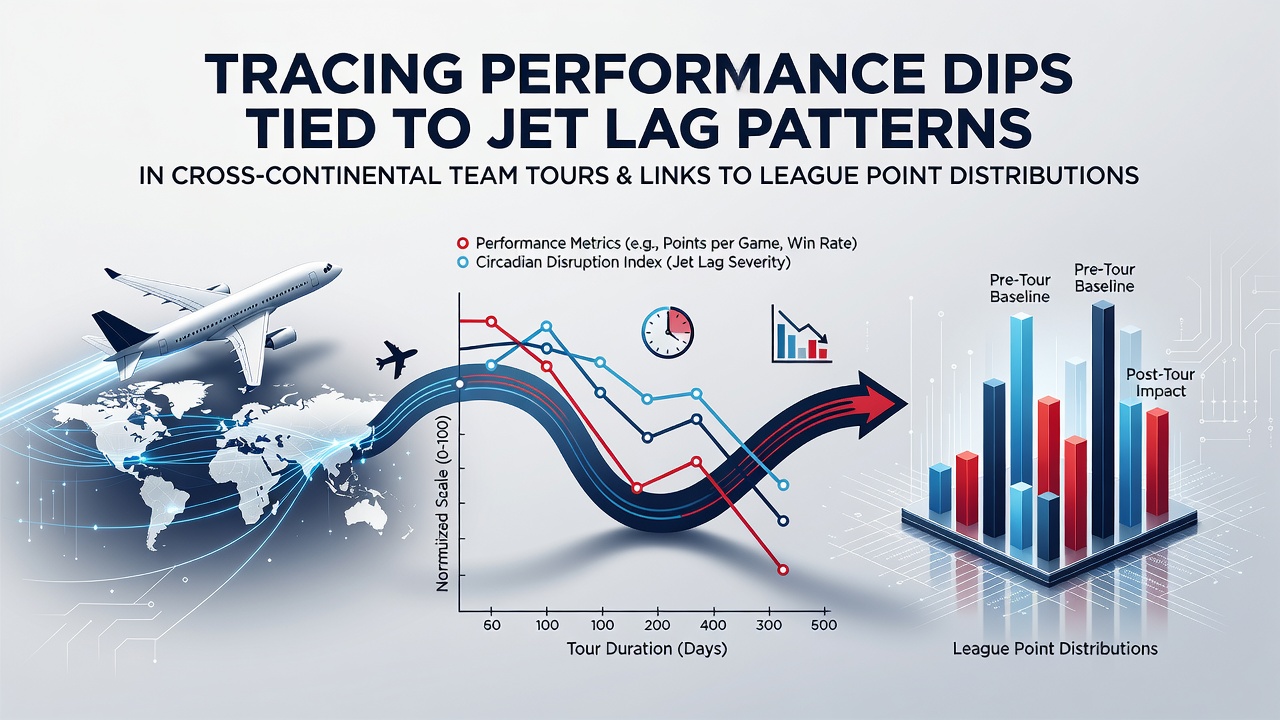
Cross-continental team tours create recurring challenges for athletes whose internal clocks must adjust to new time zones, and observers note that these adjustments often coincide with measurable declines in on-field output that ripple into league standings. Researchers have tracked how rapid eastward or westward travel disrupts sleep cycles, reaction times, and recovery rates, while data from multiple professional circuits shows corresponding shifts in points accumulated during away stretches. In August 2026 several leagues schedule extended tours that span multiple continents, which means teams face repeated exposure to these patterns just as the season's second half begins to take shape.
Jet Lag Mechanisms and Athlete Physiology
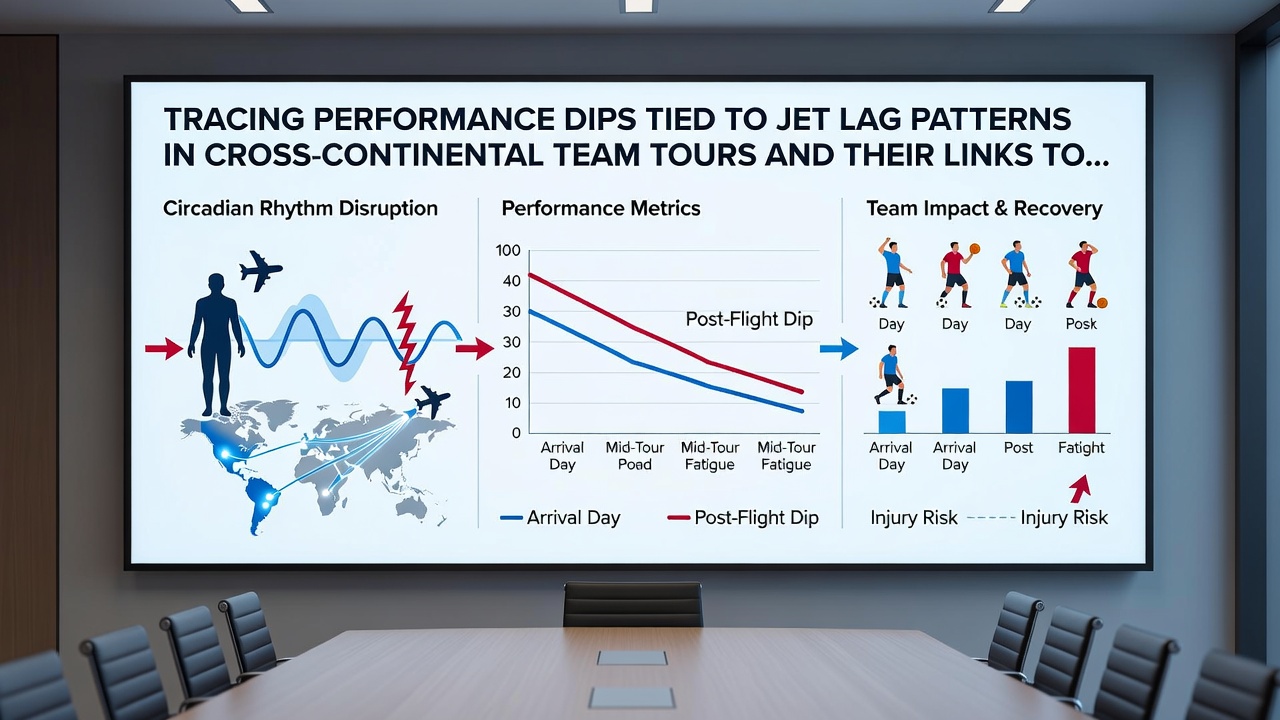
Jet lag arises when the body's circadian rhythms fall out of alignment with local time after crossing several time zones, and studies from the Australian Institute of Sport indicate that athletes experience slower adaptation rates than the general population because of high training loads and competition stress. Melatonin production, core body temperature, and cortisol release all shift on different schedules, which produces fragmented sleep and reduced neuromuscular coordination for three to seven days after arrival. Teams traveling from North America to Australia or from Europe to South America encounter the largest phase shifts, and performance metrics collected during the first matches after such flights show consistent drops in sprint speed and decision-making accuracy.
Tour Schedules and Time-Zone Exposure
League calendars in 2026 place several high-profile clubs on routes that cross eight or more time zones within a two-week window, and analysts have mapped these itineraries against historical performance records to identify clusters of reduced output. Eastward travel tends to produce greater initial impairment because the body must advance its clock, whereas westward journeys allow a longer natural adjustment window. Data collected across rugby, soccer, and basketball tours reveals that the second and third matches following arrival often carry the heaviest point penalties, since cumulative fatigue compounds the initial circadian disruption before full resynchronization occurs.
Quantifying Performance Dips
Objective measures such as GPS-tracked distance covered, pass completion percentages, and defensive reaction times drop measurably in the days immediately after long-haul flights, according to reports compiled by sports science units within professional organizations. One multi-year dataset covering trans-Pacific baseball tours found that visiting teams posted on-base percentages 12 to 18 percent lower during the opening series compared wth home stands played at similar points in the season. Similar patterns appear in European basketball circuits that schedule exhibition tours across the Atlantic, where shooting efficiency and turnover rates track closely with days since the most recent time-zone crossing.
Connections to League Point Distributions
League tables reflect these travel-related dips through the distribution of points across home and away fixtures, and statisticians have begun to isolate the portion of points lost that correlates with jet-lag exposure rather than opponent strength or venue quality. In competitions that award three points for a win, even a modest reduction in win probability during the first post-travel match can shift final standings by several positions at season's end. Models that incorporate both travel distance and direction show stronger predictive power for point differentials than models that rely solely on team rankings or recent form, which suggests that governing bodies may eventually adjust scheduling formulas to mitigate cumulative fatigue.
August 2026 Scheduling Context
August 2026 features an unusually dense cluster of intercontinental tours because several major leagues have aligned their calendars to accommodate expanded international windows, and this alignment places multiple squads in the same recovery window simultaneously. Teams that depart for South American or Asian exhibitions in late July therefore return to domestic competition in mid-August while still completing circadian readjustment, and early-season point totals may reflect this compressed timeline. Scheduling software used by league offices now incorporates circadian-rest metrics alongside traditional travel logistics, yet the density of fixtures leaves limited flexibility for recovery days.
Research Approaches and Data Sources
Longitudinal studies combine actigraphy wristbands, sleep diaries, and match statistics to build profiles of individual athletes across repeated tours, and findings published through the Sports Science Organization demonstrate that athletes with prior exposure to similar routes adapt marginally faster than first-time travelers. Another dataset assembled by Canadian researchers at the University of Toronto tracks point differentials in hockey and basketball across North American and European circuits, revealing that westward travel produces smaller average point losses than eastward routes of equivalent distance. These patterns hold after controlling for opponent quality and home-field advantage, which strengthens the case for travel-specific factors in performance modeling.
Conclusion
Performance dips tied to jet lag during cross-continental tours translate directly into altered league point distributions because small reductions in win probability accumulate across an entire season. August 2026 schedules intensify this dynamic by compressing recovery windows, and ongoing data collection will continue to clarify how circadian misalignment interacts with competitive outcomes. Organizations that integrate travel physiology into scheduling decisions may reduce the magnitude of these effects, while researchers refine models that separate jet-lag influences from other variables shaping final standings.