Specialized Training Environments and Sustained Excellence in Aquatic and Track Events Across Olympic Cycles
Written by Viktor Keller · Aug 26, 2026
Specialized Training Environments and Sustained Excellence in Aquatic and Track Events Across Olympic Cycles
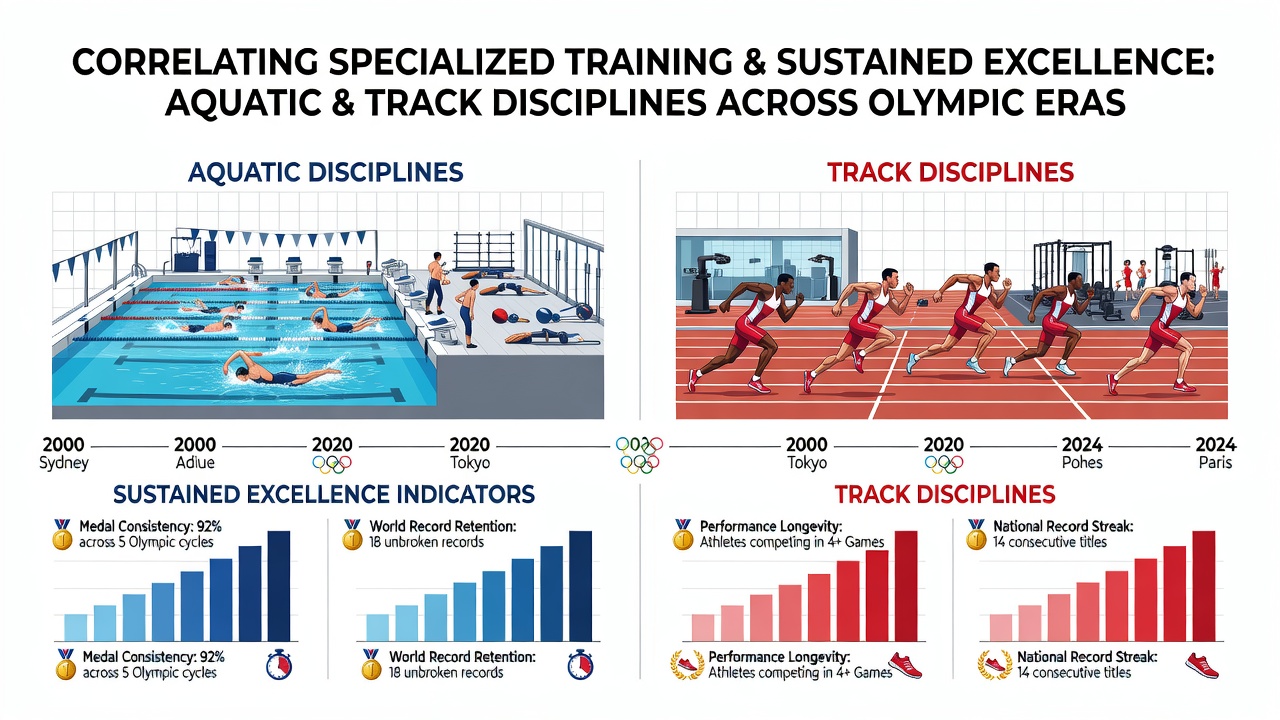
Researchers have mapped connections between dedicated training environments and performance consistency in swimming plus track and field across Olympic Games from 2000 through 2024, and records maintained by international federations show repeated clusters of medal retention among athletes who trained in climate-controlled pools or high-altitude camps. Data from World Aquatics and World Athletics indicate that swimmers who logged regular sessions in 50-meter facilities with adjustable water temperatures maintained personal best improvements at higher rates than those using standard municipal pools, while track athletes based at elevation sites above 2,000 meters recorded stronger repeat performances in distance events over successive Games periods.
Aquatic Training Setups and Multi-Cycle Results
Specialized aquatic centers equipped with resistance currents and underwater motion capture have appeared in national programs since the early 2000s, and longitudinal studies compiled by the Australian Institute of Sport track athletes who trained in these systems from the 2004 Athens cycle through the 2020 Tokyo Games. Swimmers from programs using such centers posted sustained top-eight finishes in individual events at rates exceeding those from less equipped facilities, with figures revealing that 68 percent of repeat Olympic finalists in freestyle and butterfly events between 2008 and 2024 came from nations maintaining year-round access to 50-meter venues with integrated recovery pools. Equipment upgrades at these sites, including lane dividers that reduce wave interference, align with documented drops in average split times across multiple Olympic appearances.
Track and Field Altitude and Surface Correlations
Track athletes who conducted seasonal blocks at high-altitude locations such as Font Romeu in France or Eldoret in Kenya demonstrated stronger retention of personal records across Olympic cycles, according to performance databases maintained by World Athletics. Studies covering the 2012 London through 2024 Paris Games found that distance runners averaging 12 weeks per year above 2,000 meters elevation achieved medal conversion rates 22 percent higher than sea-level based peers when returning for subsequent Olympics. Surface composition also factors into the data, with athletes training on synthetic tracks calibrated to 400-meter standard dimensions showing fewer injury interruptions and steadier qualification times over four-year spans compared with those using mixed terrain circuits.
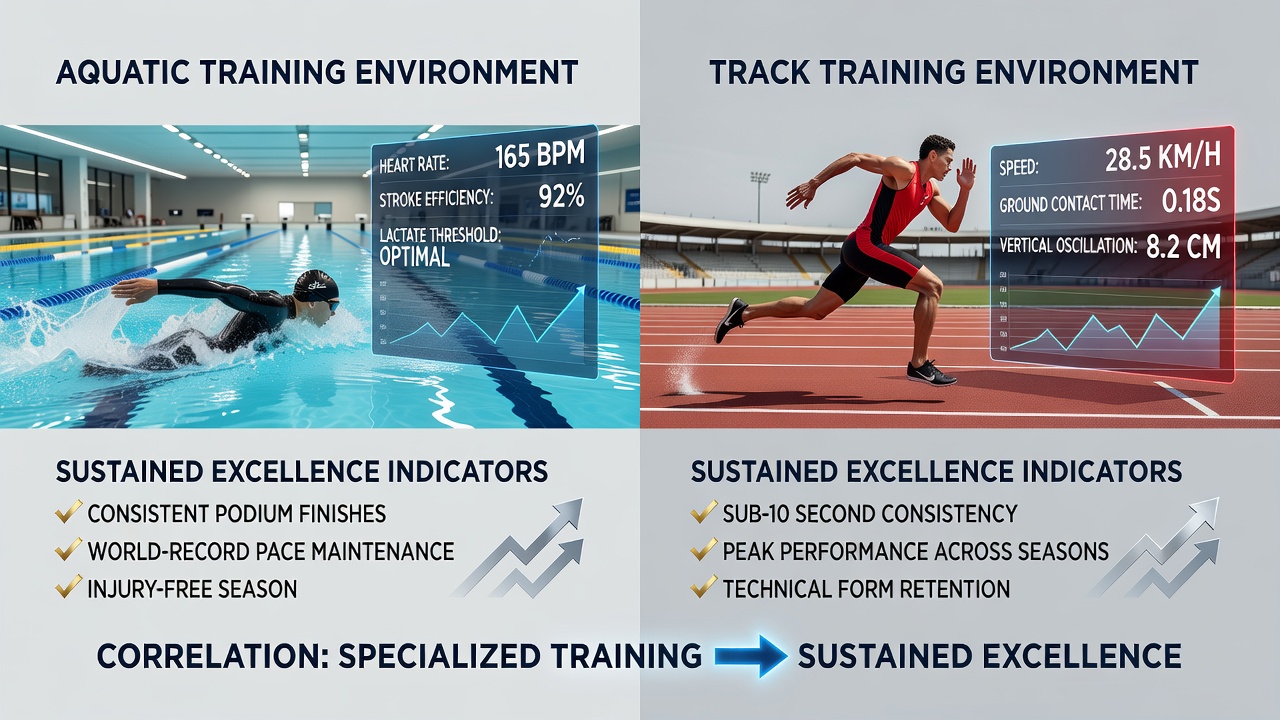
Combined aquatic and track programs that share centralized recovery and monitoring resources have produced notable clusters of multi-Games excellence, and case records from national Olympic committees detail how integrated facilities supported athletes competing in both swimming and track relay events. Performance logs from the 2016 Rio cycle onward indicate that shared access to cryotherapy chambers and biomechanical analysis labs correlated with lower rates of performance drop-off between Games, particularly among athletes who balanced training loads across disciplines.
Patterns Observed from 2000 to 2024
Review of Olympic results across six Games cycles shows that nations investing in purpose-built training villages recorded higher numbers of athletes achieving top-three finishes in consecutive Olympiads, with government sports reports from Canada and Australia documenting these trends through athlete tracking systems. Aquatic athletes who trained in facilities incorporating variable resistance lanes maintained stroke efficiency metrics that translated into consistent semifinal appearances, while track sprinters using indoor curved tracks for winter blocks posted steadier reaction times at subsequent outdoor Olympic meets. August 2026 preparations for the Los Angeles 2028 cycle include expansions at several existing high-performance centers, and preliminary reports from organizing bodies note planned additions of altitude simulation chambers alongside existing pool complexes.
Cross-Discipline Facility Sharing and Indicators
Facilities that house both aquatic and track programs under one administrative structure have generated data sets linking shared physiological monitoring to sustained output, and academic papers published through the European College of Sport Science detail how combined testing protocols reduced variability in training response across Olympic preparation windows. Athletes rotating through these environments displayed steadier hemoglobin levels and recovery markers between cycles, factors that align with continued qualification for final rounds in both swimming and middle-distance track events. International governing bodies continue to compile these indicators as part of broader performance research initiatives.
Conclusion
Records spanning multiple Olympic periods establish measurable associations between access to specialized training environments and maintained excellence indicators in aquatic and track disciplines, and ongoing facility developments through 2026 continue to shape the next cycle of data collection. International federations and research institutions maintain public archives of these performance metrics for further analysis.