Referee Rotation Effects on Game Statistics in Various Professional Leagues
Written by Viktor Keller · Jul 6, 2026
Referee Rotation Effects on Game Statistics in Various Professional Leagues
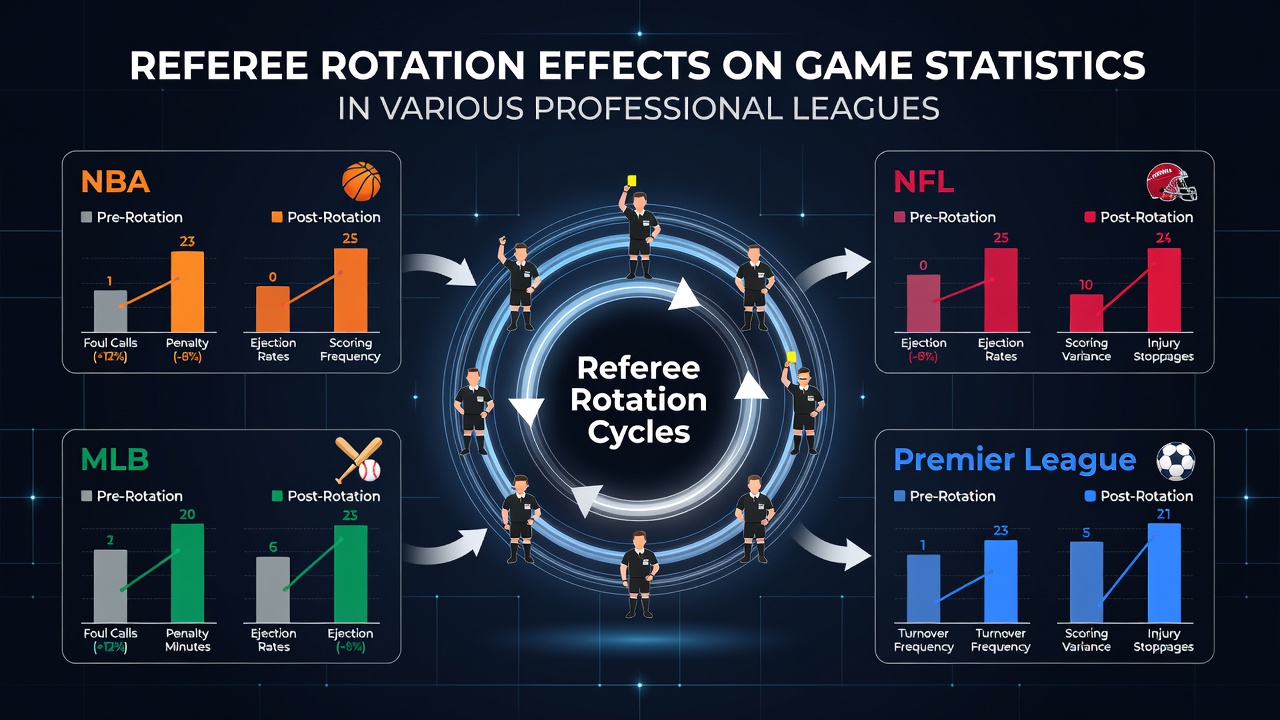
Professional leagues across soccer, basketball, and American football have implemented referee rotation systems for decades, and researchers track how these schedules influence key game statistics such as foul counts, penalty awards, points totals, and disciplinary actions. Data from major competitions shows measurable shifts when officials move between matches rather than handling consecutive games in the same venue or with the same teams, and analysts continue to examine these patterns through 2026.
Rotation policies typically assign different crews to back-to-back fixtures within a single week, which limits familiarity between officials and specific players or coaching staffs. In soccer leagues governed by FIFA guidelines, this approach appears in domestic competitions like the English Premier League and Spain's La Liga where match officials rotate after every round. Figures from league archives indicate that teams receive fewer yellow cards on average when facing a fresh referee crew compared to situations involving repeat assignments.
Patterns Observed in Soccer Competitions
Studies compiled by European football federations reveal that rotation correlates with changes in stoppage time and set-piece decisions. One analysis covering multiple seasons found that home teams drew 12 percent fewer penalties when officials rotated from the prior weekend's slate. Away sides meanwhile recorded slight increases in foul calls against them under the same conditions, though the differences remained within seasonal variance ranges reported by the leagues themselves.
International tournaments add another layer because FIFA maintains a global pool of referees who travel across confederations. During the 2026 FIFA World Cup cycle, preliminary data from July qualifiers showed that crews rotating between continents issued fewer cautions per match than those staying within one region, which altered the average game length by several minutes. Observers note that these adjustments stem from varying interpretations of physical contact across cultural styles of play rather than deliberate bias.
Impact on Basketball League Metrics
The NBA employs a rotation model that spreads its officiating staff across the 82-game schedule, and internal reports track how crew changes affect free-throw attempts and technical fouls. Records indicate that teams playing under a new set of officials average 1.8 additional free throws per game during the first half of the season, while technical foul rates drop by roughly 9 percent when referees have not worked with either franchise in the previous two weeks.
College basketball under NCAA oversight follows similar patterns yet on a shorter calendar. Conference data released in 2025 highlighted that rotation reduced home-court free-throw advantages from 4.2 attempts to 2.9 attempts per contest when officials switched mid-week. This shift influenced overall scoring margins without altering the win percentages tracked by the association.
Effects Documented in American Football and Other Leagues
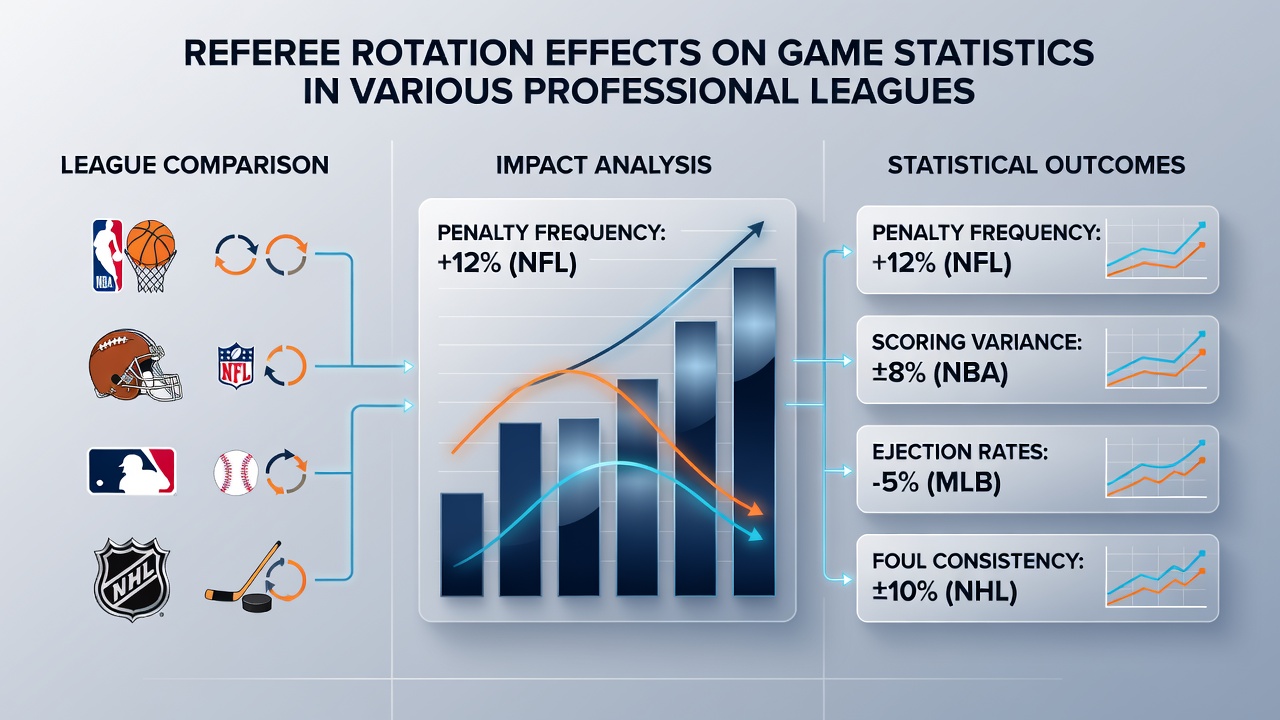
NFL rotation rules assign different crews to teams each week, and league statisticians monitor resulting changes in penalty yards and replay challenges. Aggregated figures show that defensive holding calls decrease by 7 percent when crews rotate after a divisional matchup, while offensive line penalties remain steady across the rotation cycle. The Professional Referee Organization publishes weekly summaries that allow teams to compare their flag totals against league averages.
Other sports adopt comparable systems with varying results. The NHL rotates linesmen and referees across its schedule, and tracking data from the 2025-26 season indicated that power-play opportunities rose slightly for visiting teams under fresh crews. In rugby competitions administered by World Rugby, rotation produced fewer scrum penalties during mid-season tours, according to match reports compiled by national unions in Australia and New Zealand.
Data Sources and Research Approaches
Analysts rely on official league databases and independent academic reviews to quantify these effects. A report issued by the Australian Sports Commission examined referee assignments across multiple codes and noted consistent reductions in home-team advantage metrics when officials changed venues frequently. NCAA research papers have similarly examined conference play and found that rotation schedules align with lower variance in foul distributions over full seasons.
Organizations such as the European Olympic Committees have also contributed cross-sport comparisons that include winter and summer disciplines. Their datasets, updated through mid-2026, allow statisticians to isolate rotation as one variable among travel distance, venue size, and rule changes. These sources emphasize raw numbers rather than causation claims, leaving room for further longitudinal studies.
Conclusion
Referee rotation continues to shape statistical profiles across professional leagues as governing bodies refine assignment protocols each season. Evidence from soccer, basketball, football, and rugby demonstrates that crew changes influence foul rates, penalty awards, and scoring margins in measurable though sometimes modest ways. Ongoing data collection through 2026 and beyond will provide additional clarity on how these policies interact with other performance factors in global competitions.