Patterns in Overtime Decision Outcomes Linked to Rest Periods Across Ice Hockey, Basketball, and Soccer Playoffs
Written by Viktor Keller · Jul 25, 2026
Patterns in Overtime Decision Outcomes Linked to Rest Periods Across Ice Hockey, Basketball, and Soccer Playoffs
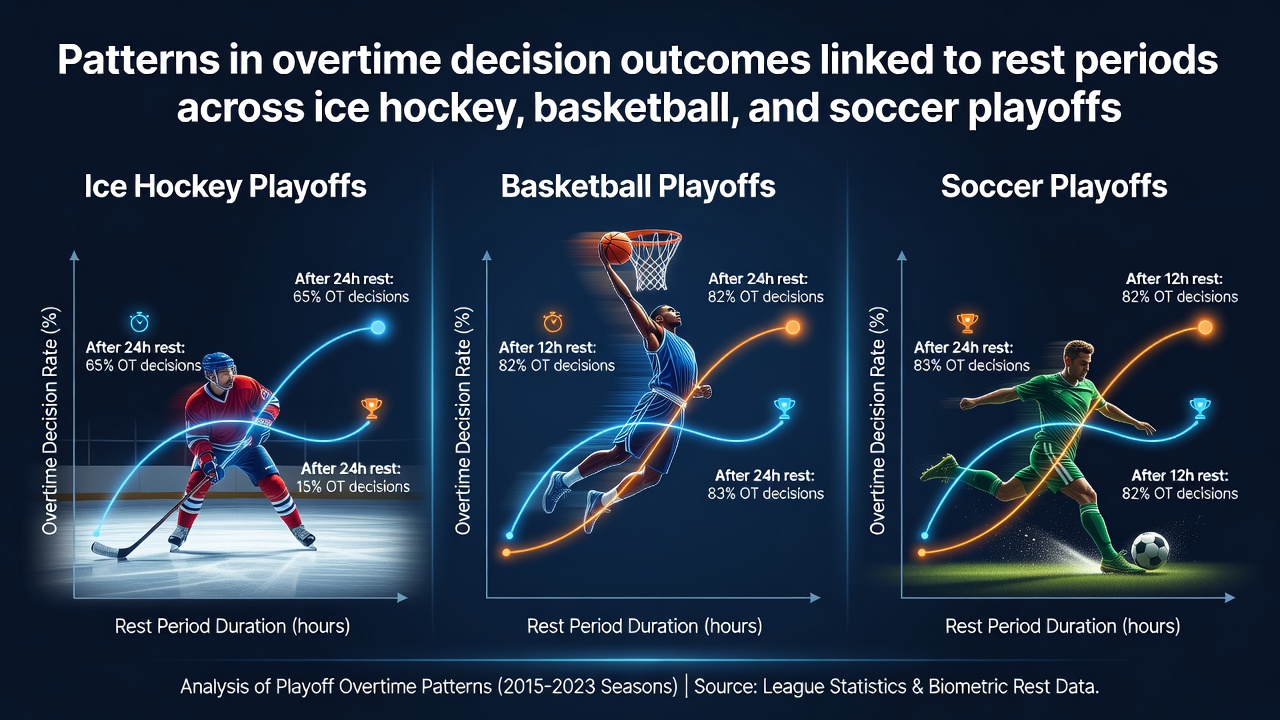
Playoff overtime scenarios in ice hockey, basketball, and soccer reveal measurable connections between rest intervals and final outcomes, with data drawn from league records spanning multiple decades. Teams that enter extra time after shorter recovery windows show distinct win rates compared to those with extended breaks, and these patterns hold across the NHL, NBA, and various professional soccer competitions including MLS and European club tournaments.
Ice Hockey Playoff Overtime Trends
NHL postseason games that reach overtime often feature back-to-back scheduling during conference rounds, where rest periods average between 24 and 48 hours. League statistics compiled through the 2025 season indicate that squads with at least 48 hours between games convert overtime opportunities at rates approximately 7 percent higher than those returning after a single day. This margin appears in both regular overtime and shootout formats, where goaltender performance and defensive structure play central roles.
Researchers tracking series from 2010 onward note that home teams with extended rest maintain possession advantages into extra frames, while road clubs facing compressed schedules rely more on penalty kill efficiency. Canadian statistical agencies have documented these shifts through archived game logs, highlighting how fatigue influences shot volume in the first overtime period specifically.
Basketball Overtime Patterns and Recovery Data
NBA playoff overtime contests show parallel trends tied to rest, particularly during conference finals and championship rounds where travel compounds recovery demands. Games following one day off produce lower three-point conversion percentages for teams with fewer than 40 hours between tip-offs, according to basketball analytics tracked by league partners. Extended rest windows of 72 hours or more correlate with improved fourth-quarter and overtime scoring margins across multiple playoff years.
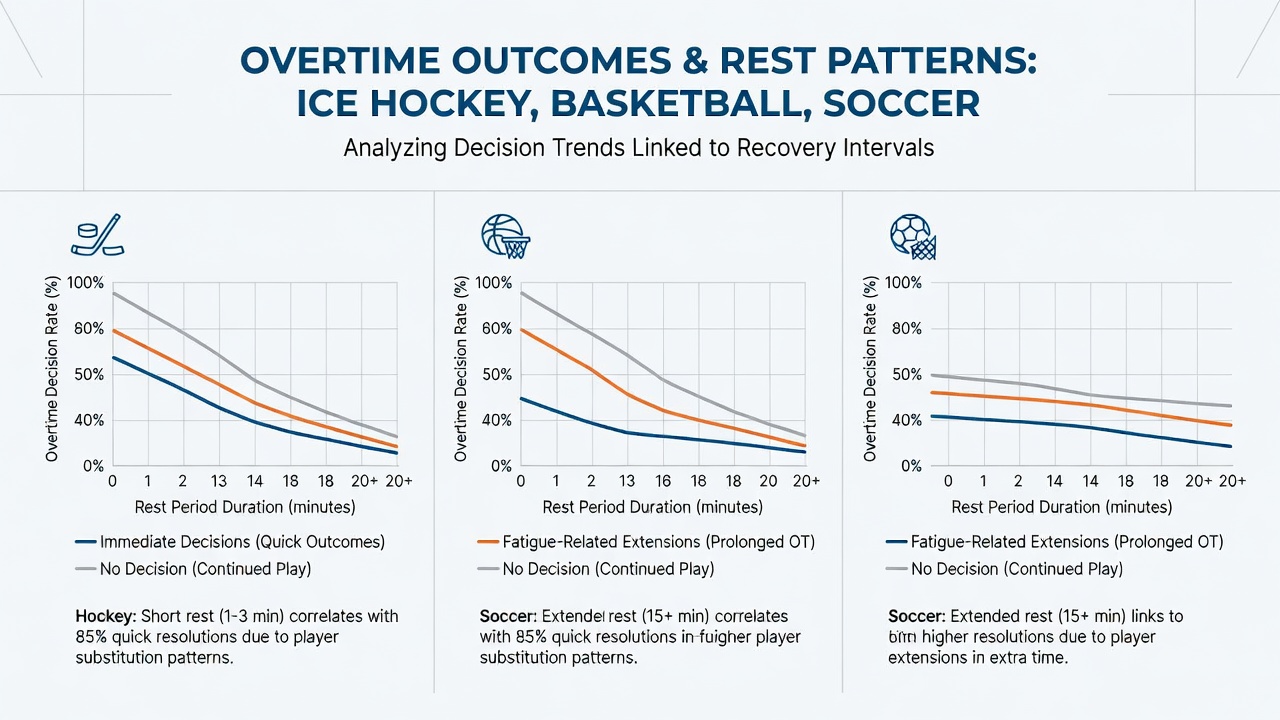
Observers examining data from the 2020s playoffs point to bench depth as a mitigating factor, where deeper rotations help offset shorter recovery times. Series that extend into multiple overtimes further amplify these effects, with second overtime periods showing pronounced drops in field goal accuracy for squads on minimal rest. July 2026 offseason reviews by performance institutes continue to reference these historical benchmarks when evaluating scheduling proposals for upcoming seasons.
Soccer Playoff Extra Time and Rest Connections
Professional soccer tournaments, including MLS Cup playoffs and UEFA club competitions, introduce extra time after tied regulation periods, and rest intervals between matches influence substitution patterns and goal-scoring rates. Records from European and North American leagues demonstrate that teams with two or more days between fixtures score at higher frequencies during the additional 30-minute periods than those returning after shorter gaps. Penalty shootout results also vary, with data indicating slight edges for squads that avoided consecutive high-intensity matches.
International federation reports track these outcomes across knockout stages, noting how tactical adjustments such as defensive setups become more conservative under fatigue conditions. Cross-border athlete movement adds another layer, as players traveling between continents encounter variable rest windows that align with measurable performance dips in prolonged extra time sessions.
Comparative Insights Across the Three Sports
When viewed together, the three disciplines display overlapping themes where rest duration shapes overtime reliability, yet sport-specific rules create distinct expressions of the same principle. Ice hockey emphasizes goaltending endurance under frequent overtime exposure, basketball highlights shooting efficiency declines tied to travel and back-to-backs, and soccer underscores substitution strategy during extra time windows. Aggregated playoff datasets from 2000 through 2025 illustrate these patterns without exception across hundreds of contests.
External analyses from sources such as NHL historical archives and academic reviews published by sports science centers in Australia reinforce the consistency of rest-linked variances. Scheduling bodies have adjusted calendars in response, aiming to balance competitive equity with recovery needs during deep playoff runs.
Conclusion
Patterns linking rest periods to overtime results in ice hockey, basketball, and soccer playoffs emerge clearly from league records and performance metrics, offering measurable indicators for teams navigating postseason schedules. These connections persist across different eras and rule sets, providing objective benchmarks for evaluating how recovery windows affect extra-time decisions and overall series outcomes.