Mapping the Evolution of Tactical Formations Through Decades of Penalty Kick Success Rates in Global Soccer Leagues
Written by Gisela Schmidt · Jul 11, 2026
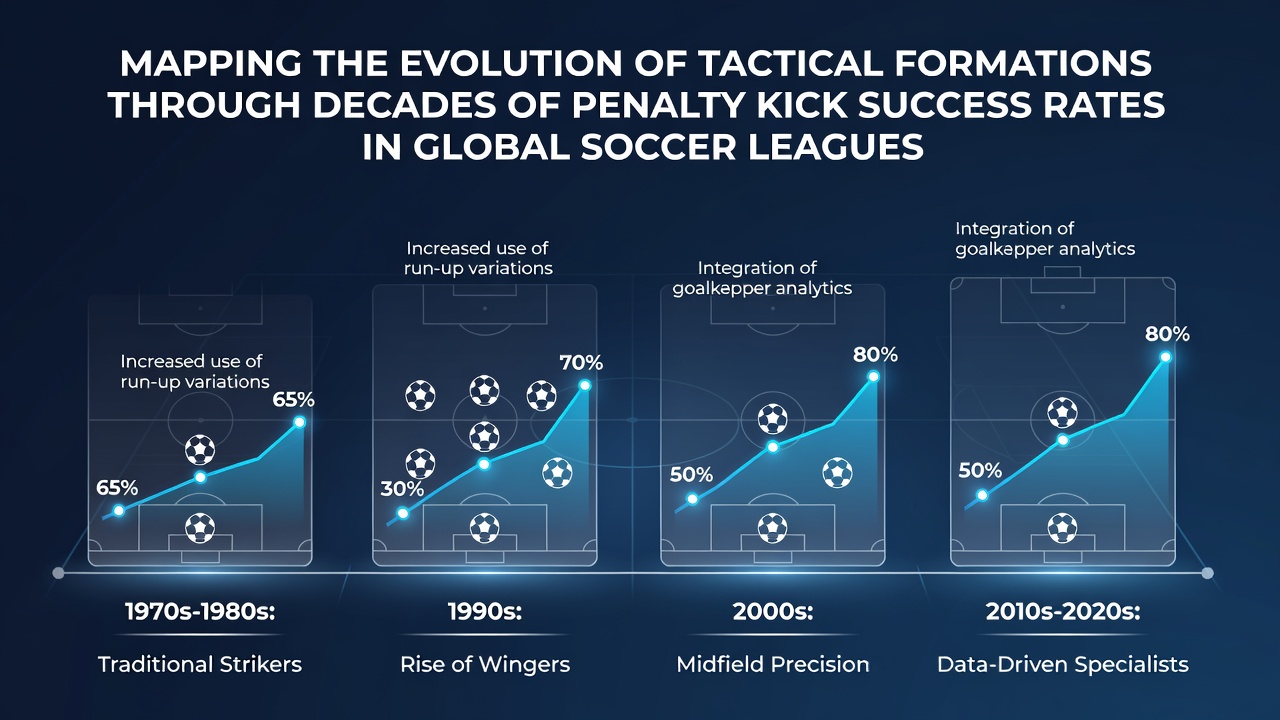
Mapping the Evolution of Tactical Formations Through Decades of Penalty Kick Success Rates in Global Soccer Leagues
Penalty kick outcomes in professional soccer have shifted alongside changes in team structures, and analysts track these patterns across leagues such as the English Premier League, Serie A, and Brazil's Série A. Formations moved from rigid setups in the mid-20th century toward fluid systems that emphasize width, pressing triggers, and defensive compactness, while success percentages on spot kicks fluctuated between 70 and 82 percent depending on the era and league.
Postwar Adjustments and Early Data Patterns
Teams in the 1950s and 1960s relied on the WM or 4-2-4 systems that placed heavy emphasis on attacking width, and records from European competitions indicate penalty conversion hovered near 74 percent. Leagues in South America showed similar figures during the same period, with Brazilian clubs adapting the same structures and recording comparable rates according to archived match reports. Researchers note that goalkeepers operated with less specialized training, which contributed to those baseline numbers before video analysis became common.
Defensive Consolidation in the 1970s and 1980s
The adoption of 4-4-2 and catenaccio variants tightened central areas, and data compiled by continental federations shows penalty success climbed toward 78 percent in several top divisions. Midfield density altered how teams prepared set pieces, including spot kicks, because players spent more time rehearsing under crowded conditions. Leagues in Italy and Argentina documented these adjustments through internal technical bulletins that later fed into broader statistical reviews.
Pressing Systems and Late-Century Shifts
By the 1990s and early 2000s, formations such as 3-5-2 and 4-3-3 gained traction, while leagues tracked rising conversion rates that reached 80 percent in the Premier League and La Liga. The increased emphasis on high lines and quick transitions changed how penalty takers approached their runs, since fatigue patterns from pressing influenced decision-making in shootouts. Studies from sports science departments at institutions in Australia and Canada examined these correlations through longitudinal datasets spanning multiple continents.
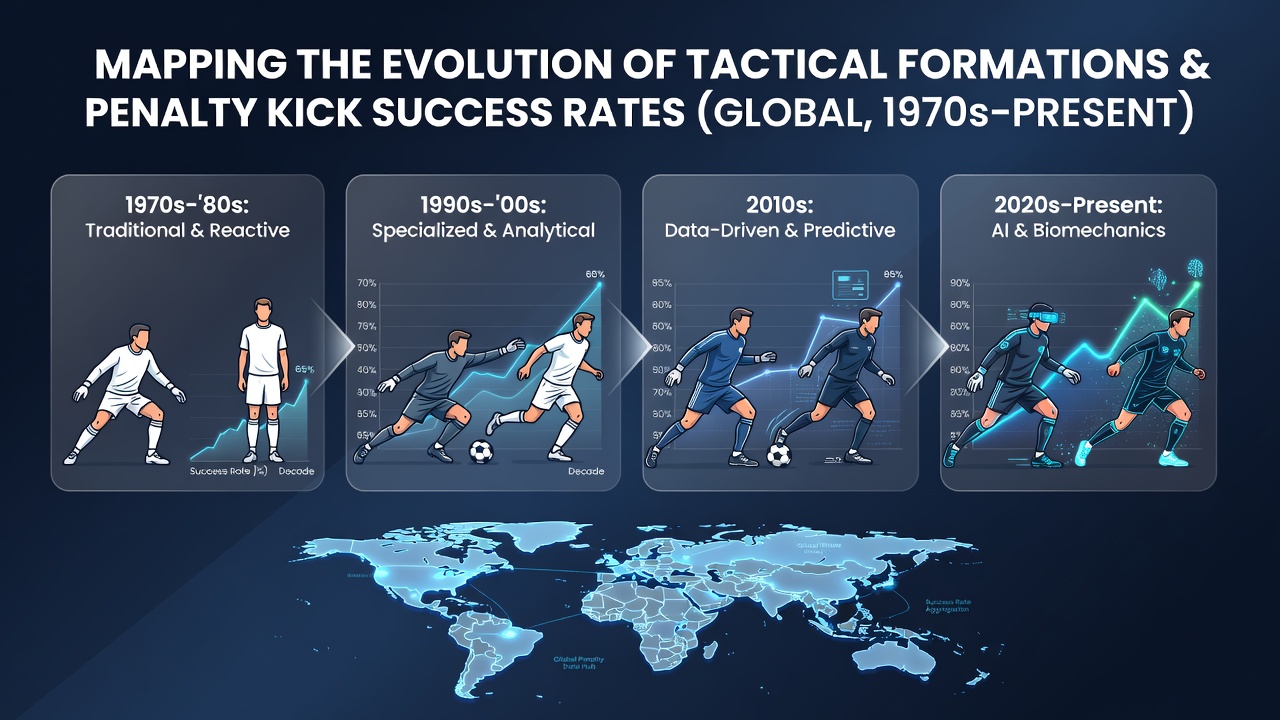
Coaches adjusted goalkeeper positioning drills to counter new attacking shapes, and success percentages stabilized around 81 percent in monitored competitions by the mid-2010s. UEFA technical documents detail how video preparation and specialized penalty coaches entered routines during this window, producing measurable lifts in accuracy across top clubs.
Contemporary Structures and 2026 Observations
Current systems favor 4-2-3-1 hybrids or inverted fullback variations that compress space in central zones, and preliminary figures released in July 2026 indicate conversion rates remain near 79 percent across combined data from the Premier League, Bundesliga, and J-League. MLS and Saudi Pro League entries show slightly lower averages, which some analysts attribute to differing training emphasis rather than formation alone. Cross-border player movement continues to introduce varied penalty routines that interact with these tactical frameworks.
Leagues maintain detailed logs that link formation usage to set-piece outcomes, revealing that teams deploying double-pivot midfielders recorded marginally higher shootout success in recent seasons. Academic papers hosted by European research networks and North American sports institutes provide the methodological frameworks used to isolate these variables from confounding factors such as weather or crowd density.
Conclusion
Decades of league records demonstrate that tactical formations have evolved in tandem with measurable changes in penalty kick performance, yet the relationship remains mediated by training methods, goalkeeper specialization, and preparation protocols. Data from multiple confederations continues to accumulate through 2026, supplying fresh material for ongoing comparisons across global competitions.