How Contract Extensions Align with Milestone Accumulations in Rugby Unions and Cricket Boards Amid Shifting Sponsorship Landscapes
Written by Ines Coleman · Jun 15, 2026
How Contract Extensions Align with Milestone Accumulations in Rugby Unions and Cricket Boards Amid Shifting Sponsorship Landscapes
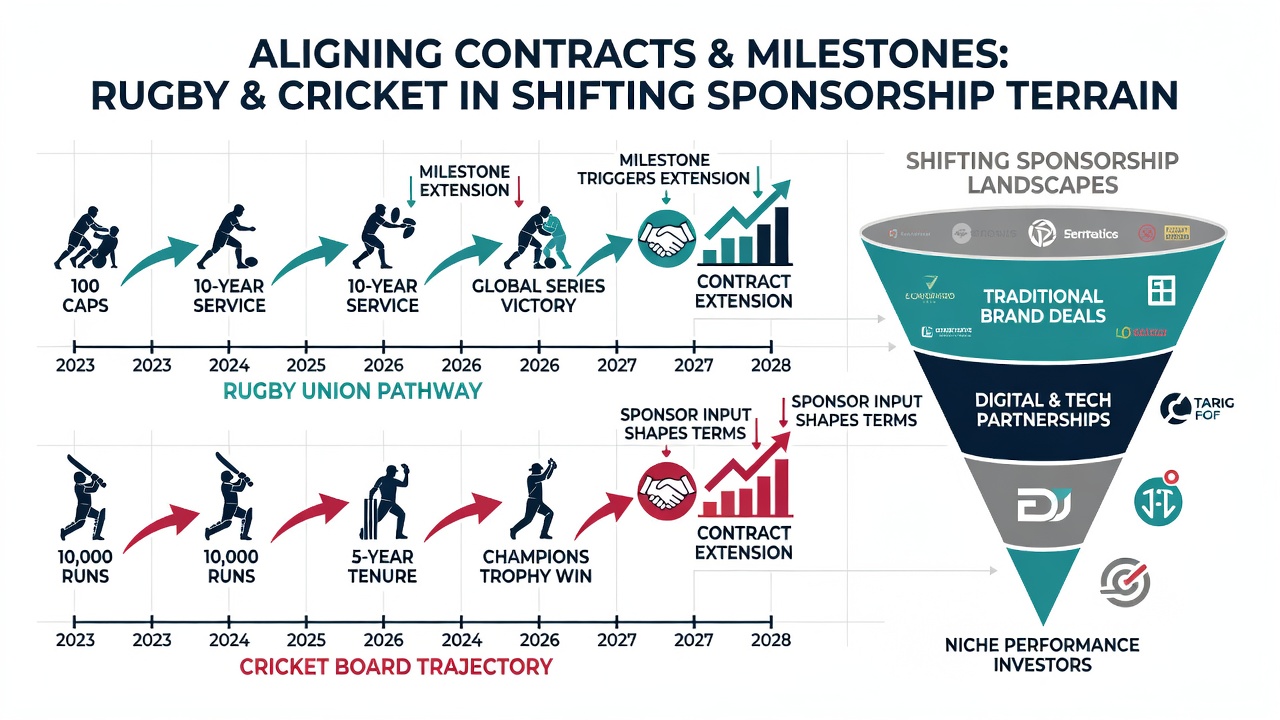
Contract extensions in rugby unions and cricket boards frequently synchronize with players reaching defined performance thresholds such as accumulated international caps, match wins contributed, or statistical benchmarks in runs and wickets, and these alignments occur as sponsorship arrangements undergo periodic realignments driven by market entries from technology firms and regional brands.
Milestone Frameworks in Professional Rugby and Cricket
Rugby unions track player progression through caps earned in test matches along with tries scored and tackles completed, while cricket boards monitor batting averages, wicket tallies, and series victories as core indicators that trigger review processes for contract renewals. Observers note that unions in nations such as New Zealand and South Africa maintain internal databases that flag athletes approaching 50 or 100 caps, at which point extension negotiations typically begin to retain experienced contributors amid squad planning cycles.
Cricket boards apply similar structures where players crossing 5,000 Test runs or 200 wickets prompt formal evaluations that incorporate both on-field data and projected future output, and these evaluations integrate directly into renewal timelines that boards publish annually. Data from governing bodies shows consistent patterns where milestone proximity accelerates contract discussions by several months compared to standard review periods.
Sponsorship Shifts Influencing Extension Timelines
Sponsorship landscapes in both sports have seen increased involvement from digital payment platforms and apparel manufacturers since the mid-2020s, which has altered revenue streams available for player contracts and created incentives for boards to extend deals with athletes who deliver measurable commercial value through milestone achievements. These new partners often require visibility tied to high-profile performers, leading unions and boards to prioritize extensions for players who combine statistical milestones with market appeal.
Boards report that sponsorship contracts now include performance clauses linking athlete milestones to bonus payments, and this structure encourages alignment between extension decisions and accumulation events rather than calendar-based renewals alone. In June 2026, several rugby unions announced extensions immediately following national team tours where multiple players reached cap milestones, reflecting the integration of commercial timelines with sporting calendars.
Alignment Mechanisms Across Unions and Boards
Rugby unions employ tiered contract systems where base salaries rise upon milestone completion, and extension offers incorporate these adjustments to maintain roster stability while satisfying sponsor expectations for continuity. Cricket boards operate parallel systems that tie central contracts to series participation and statistical thresholds, resulting in extension offers that activate when players accumulate sufficient appearances or runs within defined windows.
Analyses of contract records indicate that extensions granted within three months of milestone events occur at higher rates than those scheduled independently, particularly when sponsorship revenue supports the increased compensation packages. Those who have examined board financial statements observe that this synchronization helps manage budget allocations as new sponsors contribute funds earmarked for talent retention.

Regional Examples of Coordinated Extensions
In Australian cricket, players reaching 50 Test appearances have received extensions that coincide with renewed sponsorship agreements involving national carriers and equipment suppliers, and these deals reference both historical performance data and future milestone projections. Similar patterns appear in South African rugby where unions extend contracts for players accumulating 30 or more caps during domestic and international seasons, supported by revenue from expanded broadcast partnerships that emerged after 2024.
European rugby unions have adopted comparable approaches where milestone-based extensions help stabilize squads ahead of continental competitions, and cricket boards in the same regions apply statistical thresholds to determine renewal eligibility amid shifting title sponsorship arrangements. Figures from industry reports reveal that such alignments reduce player turnover by approximately 15 percent in teams that maintain consistent milestone tracking protocols.
Future Projections and Ongoing Adjustments
As sponsorship landscapes continue to incorporate global streaming services and sustainability-focused brands, rugby unions and cricket boards adjust their extension criteria to emphasize milestones that align with commercial deliverables such as social media engagement tied to player achievements. Research from sports economics groups indicates that these adjustments maintain competitive balance while ensuring revenue from new partners flows into contract structures that reward accumulated performance.
Boards in multiple jurisdictions continue to refine internal policies that link extension windows directly to milestone accumulation schedules, creating predictable pathways for both athletes and sponsors. Data compiled through 2026 demonstrates sustained correlation between these elements across major competitions.
Conclusion
Contract extensions in rugby unions and cricket boards demonstrate clear linkages to milestone accumulations as sponsorship environments evolve with diverse corporate participation, and governing bodies implement structured processes that coordinate statistical thresholds with renewal decisions to support both sporting and commercial objectives. These mechanisms operate consistently across regions while adapting to new revenue sources that emerged in recent cycles.