How Coaching Migrations Reshape Tactical Blueprints in Volleyball Federations and Handball Leagues
Written by Otto Baumann · Aug 3, 2026
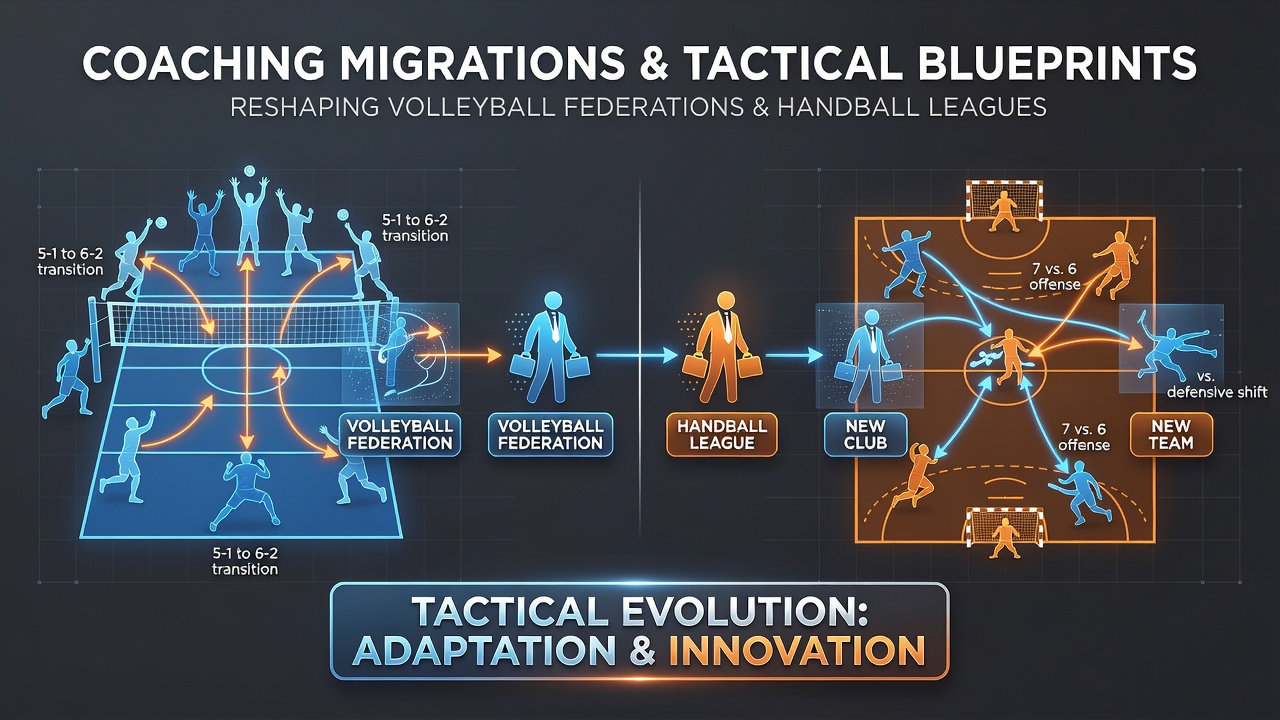
How Coaching Migrations Reshape Tactical Blueprints in Volleyball Federations and Handball Leagues
Coaching migrations across borders have accelerated since the mid-2010s, and data from international federations shows these moves directly alter offensive and defensive systems in volleyball and handball. National teams and club leagues adopt new formations, serve patterns, and transition strategies after foreign coaches arrive, while outgoing coaches export established methods to their next posts. August 2026 marks another wave of appointments ahead of the European Handball Federation qualifiers and FIVB Volleyball Nations League cycles, with several high-profile shifts already confirmed.
Patterns of Movement in Volleyball Federations
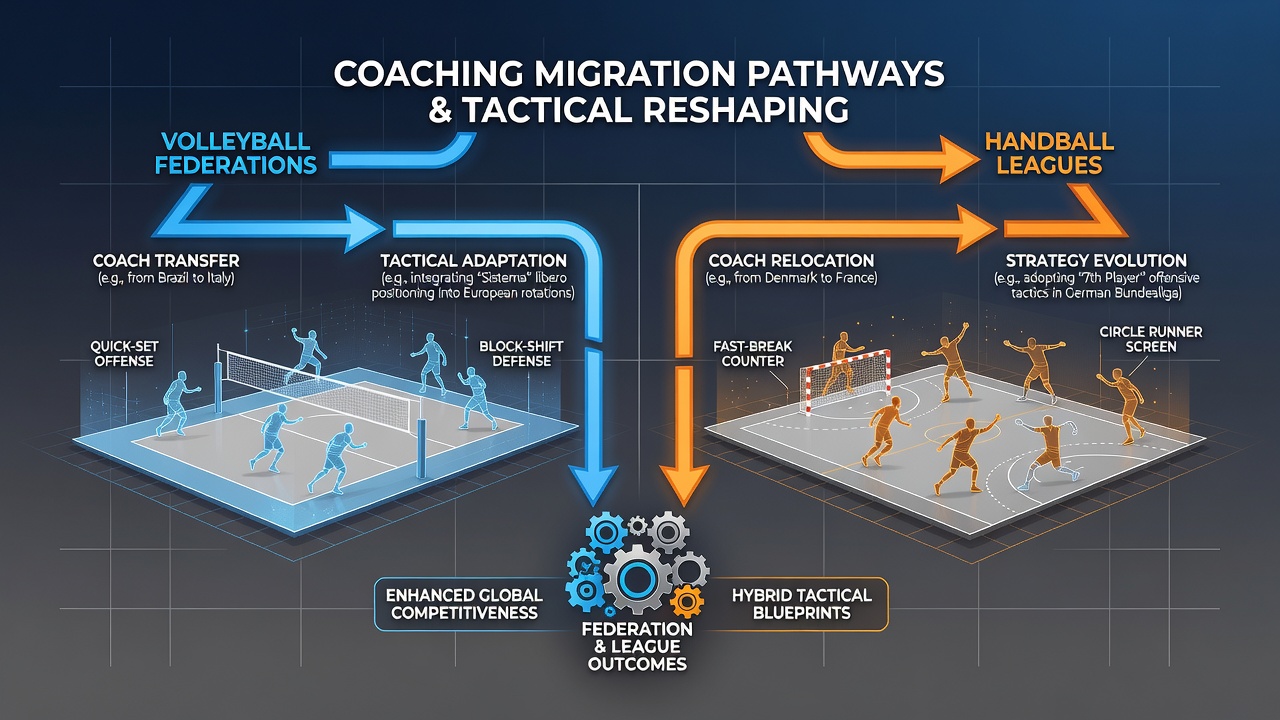
Volleyball federations track coach transfers through licensing databases maintained by the FIVB, and recent figures reveal that over 40 percent of national team head coaches in Europe and Asia held prior positions in another country during the previous decade. These relocations often coincide with rule adjustments or performance plateaus, prompting federations to seek specialists in blocking schemes or reception efficiency. When a coach trained in Italian Serie A systems moves to a South American federation, the receiving program frequently integrates middle-blocker coordination drills that emphasize quicker footwork and varied block timings. Observers note corresponding rises in kill percentages within two seasons, according to federation performance reports.
Handball League Adaptations and Tactical Realignments
Handball leagues experience parallel transformations when coaches cross between Scandinavian, German, and Eastern European clubs. The European Handball Federation publishes annual technical reports that document how imported fast-break philosophies alter game tempo and goalkeeper positioning. A coach departing from a Danish league side to a French top-division team, for example, often introduces zone-defense rotations that compress space near the six-meter line, and clubs adopting these methods record measurable drops in opponent shooting accuracy during the first half of the season. Data collected by league statisticians further indicates that set-piece conversion rates climb when coaches bring experience from high-possession systems common in Eastern Europe.
Case Examples of System Transfers
One documented transfer involved a Brazilian volleyball coach who relocated to a Japanese national program in 2024. The staff incorporated South American pipe-attack variations that prioritize back-row attackers in zone 6, and match logs from the 2025 season showed an increase in points scored from that position compared with prior years. In handball, a Swedish coach moving to a Polish league club in early 2025 introduced a 3-2-1 defense that forced more turnovers in transition, and official league statistics reflected higher steal numbers during home matches that season. Federations compile these outcomes in technical bulletins, allowing other programs to evaluate similar adjustments before committing to personnel changes.
Measurement of Tactical Outcomes
Performance metrics compiled by the FIVB and the European Handball Federation provide quantitative evidence of these shifts. Volleyball reception efficiency improves when coaches emphasize platform angles drawn from their previous leagues, while handball teams record elevated save percentages after adopting goalkeeper movement patterns from new staff. August 2026 training camps will serve as testing grounds for several such integrations, with preliminary scouting reports already circulating among analysts. These reports compare pre- and post-migration statistics across multiple indicators, including rally duration in volleyball and possession time in handball, to isolate the effects of coaching influence from roster changes.
Structural Factors Influencing Migration Effects
League regulations and federation development pathways shape how quickly new tactics embed. Volleyball federations that maintain centralized coach education modules accelerate the spread of imported concepts, whereas decentralized handball leagues rely more on individual club academies to translate foreign systems into local contexts. Contract lengths also matter: shorter appointments often produce incremental adjustments rather than wholesale overhauls, while multi-year commitments correlate with deeper integration of specialized drills and video analysis protocols. Researchers at sports science institutes have begun correlating these variables with outcome data to identify which migration patterns yield the most consistent tactical evolution.
Conclusion
Coaching migrations continue to serve as primary vectors for tactical diffusion in volleyball federations and handball leagues. Statistical tracking by governing bodies documents measurable changes in attack efficiency, defensive structures, and transition speed following each significant appointment. As August 2026 approaches, additional transfers will supply fresh opportunities to observe how established blueprints adapt to new environments, wth ongoing data collection providing the basis for comparative analysis across competitions.