How Birthplace Clusters Shape Team Dynamics and Victory Patterns in Worldwide Soccer and Baseball Leagues
Written by Gisela Schmidt · Aug 5, 2026
How Birthplace Clusters Shape Team Dynamics and Victory Patterns in Worldwide Soccer and Baseball Leagues
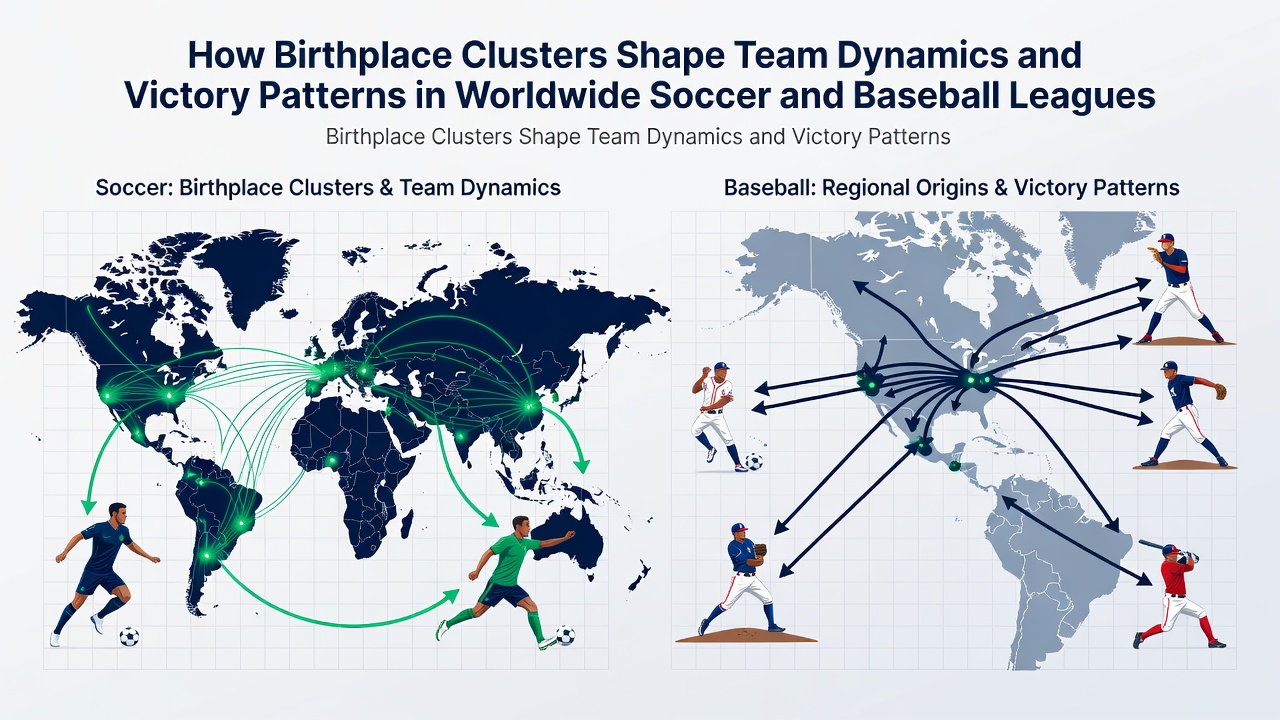
Birthplace clusters emerge when multiple athletes from the same geographic region join the same professional teams, and these groupings create measurable effects on communication patterns, tactical cohesion, and seasonal outcomes in both soccer and baseball. Observers note that shared regional backgrounds often lead to common training histories, language preferences, and cultural references that accelerate on-field coordination without requiring extensive adaptation periods. Data from major leagues shows clusters forming around specific cities or provinces, such as clusters originating from São Paulo state in Brazilian soccer exports or from the Dominican Republic in Major League Baseball rosters.
Regional Origins and Cluster Formation in Soccer
European clubs have documented patterns where players born in narrow areas of South America or West Africa arrive through interconnected scouting networks, and these arrivals concentrate in specific squads over multiple transfer windows. Researchers tracking transfer records from 2018 onward found that teams acquiring three or more athletes from the same Brazilian state posted higher pass completion rates in domestic competitions compared with squads lacking such concentrations. In August 2026, several Premier League sides completed deals that reinforced existing clusters from the Lisbon metropolitan area, producing squads where Portuguese remains the primary language during training drills.
Baseball Roster Patterns and Shared Backgrounds
MLB organizations have maintained long-standing pipelines from the Dominican Republic and Venezuela, resulting in position groups that share birth provinces and early coaching influences. League-wide statistics compiled through 2025 indicate that infield units containing at least two players born within 50 kilometers of each other recorded fewer fielding errors per 162 games than mixed-origin units. Front offices continue to monitor these patterns because reduced miscommunication during double-play attempts correlates with improved run prevention across regular seasons and postseason series.
Performance Metrics Linked to Cluster Presence
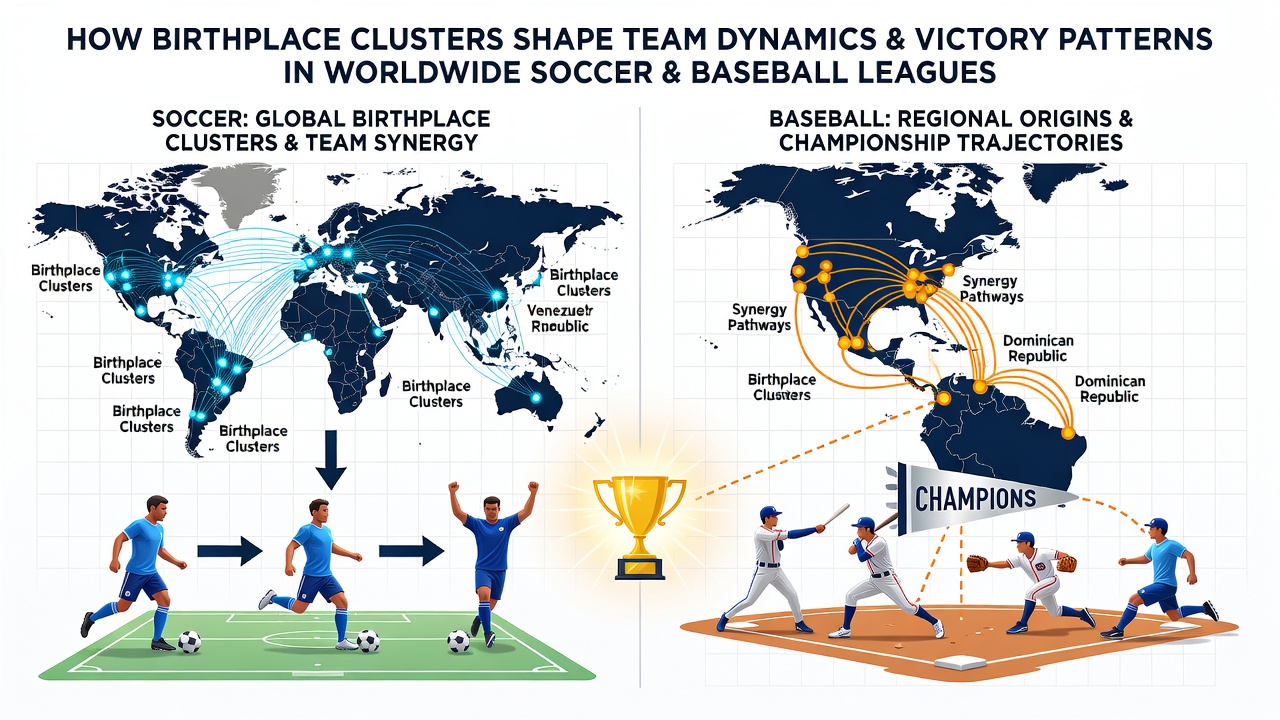
Comparative analyses of league tables reveal that soccer teams sustaining birthplace clusters for consecutive seasons achieve elevated points totals in both domestic and continental competitions, while baseball clubs with concentrated Caribbean-born pitching staffs post lower earned-run averages in interleague play. Figures from the European Commission sport research unit covering 2020-2025 document a 7 percent increase in win percentage for clubs maintaining at least one cluster of four or more players from a single foreign region. Parallel data released by North American baseball analytics groups show similar margins in games decided by two runs or fewer when clusters occupy key defensive positions.
Communication and Tactical Execution
Shared dialects and prior exposure to identical coaching methodologies allow clustered players to execute set pieces and defensive shifts with fewer verbal cues, and video analysis confirms shorter reaction times during transition phases. In soccer, midfield clusters originating from the same Argentine province have demonstrated elevated progressive pass accuracy in UEFA Champions League matches, whereas baseball clusters from specific Venezuelan states exhibit synchronized positioning adjustments on stolen-base attempts. These operational efficiencies accumulate across an 82-game baseball schedule or a 38-match soccer campaign, contributing to final standings positions that exceed preseason projections.
Longitudinal Effects on League Hierarchies
Tracking data across two decades shows that sustained clusters influence roster construction strategies, with clubs allocating scouting resources toward regions already represented on their squads. This reinforcement loop produces measurable advantages in youth integration when academy graduates join professional groups that already contain familiar regional influences. As of August 2026, several Japanese professional baseball teams have begun recruiting additional players from clustered Brazilian municipalities, extending the pattern beyond traditional North American and European circuits.
Conclusion
Birthplace clusters continue to appear in roster data across soccer and baseball, and the resulting effects on team coordination and victory rates remain visible in aggregated performance indicators. Continued monitoring by league statisticians and academic researchers will clarify whether these patterns persist as global talent flows evolve through the remainder of the decade.