Global Talent Flows: Mapping How Cross-Border Athlete Movements Reshape League Hierarchies and Performance Indicators in Multiple Disciplines
Written by Ines Coleman · May 23, 2026
Global Talent Flows: Mapping How Cross-Border Athlete Movements Reshape League Hierarchies and Performance Indicators in Multiple Disciplines
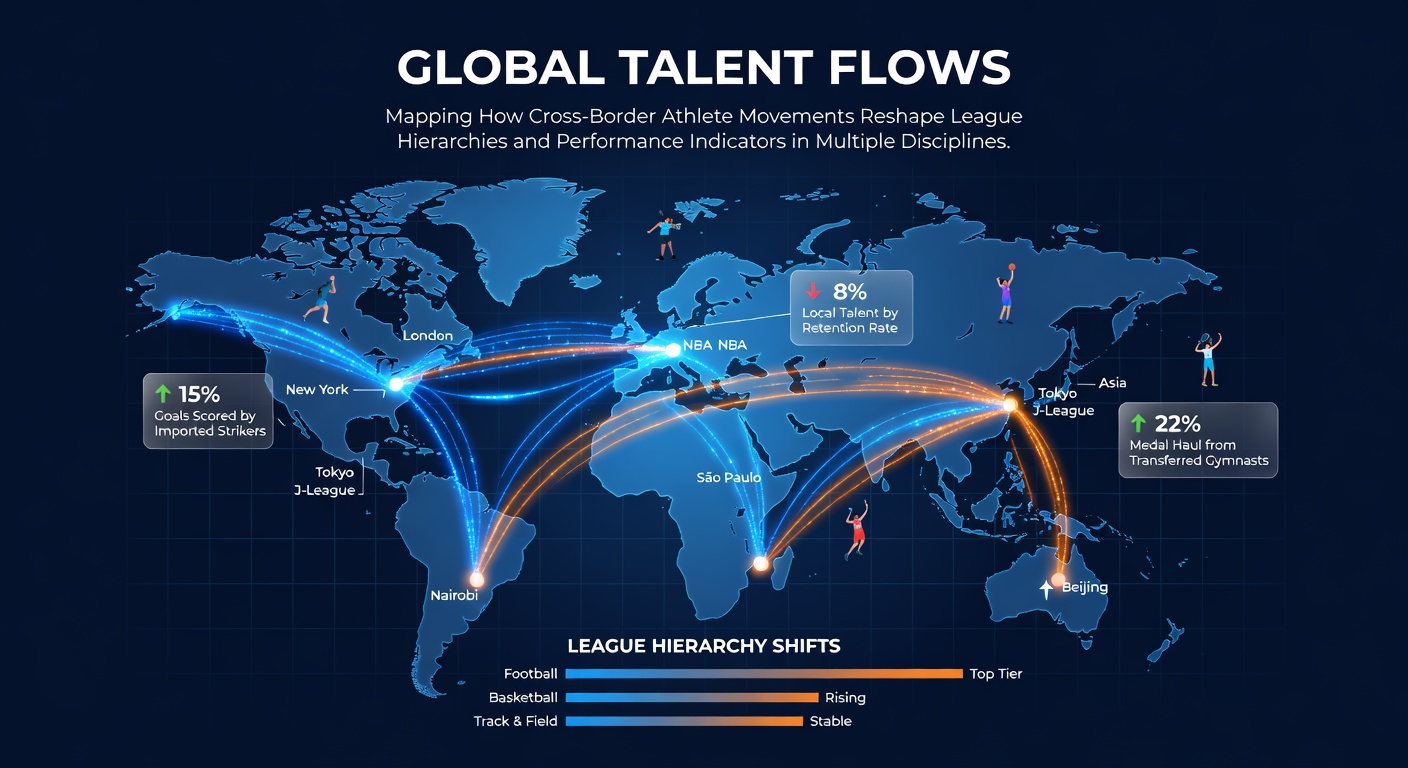
Cross-border athlete movements have accelerated since the early 2000s, with data from major sports governing bodies showing thousands of professional transfers each year across football, basketball, baseball and ice hockey. Researchers tracking these patterns note that destination leagues in Europe and North America consistently rank higher in competitive metrics after sustained inflows of talent from South America, Africa and Eastern Europe. Performance indicators such as win percentages, goal differentials and player efficiency ratings shift measurably when clubs integrate international rosters, according to longitudinal studies compiled through 2025.
Football Transfers and European League Standings
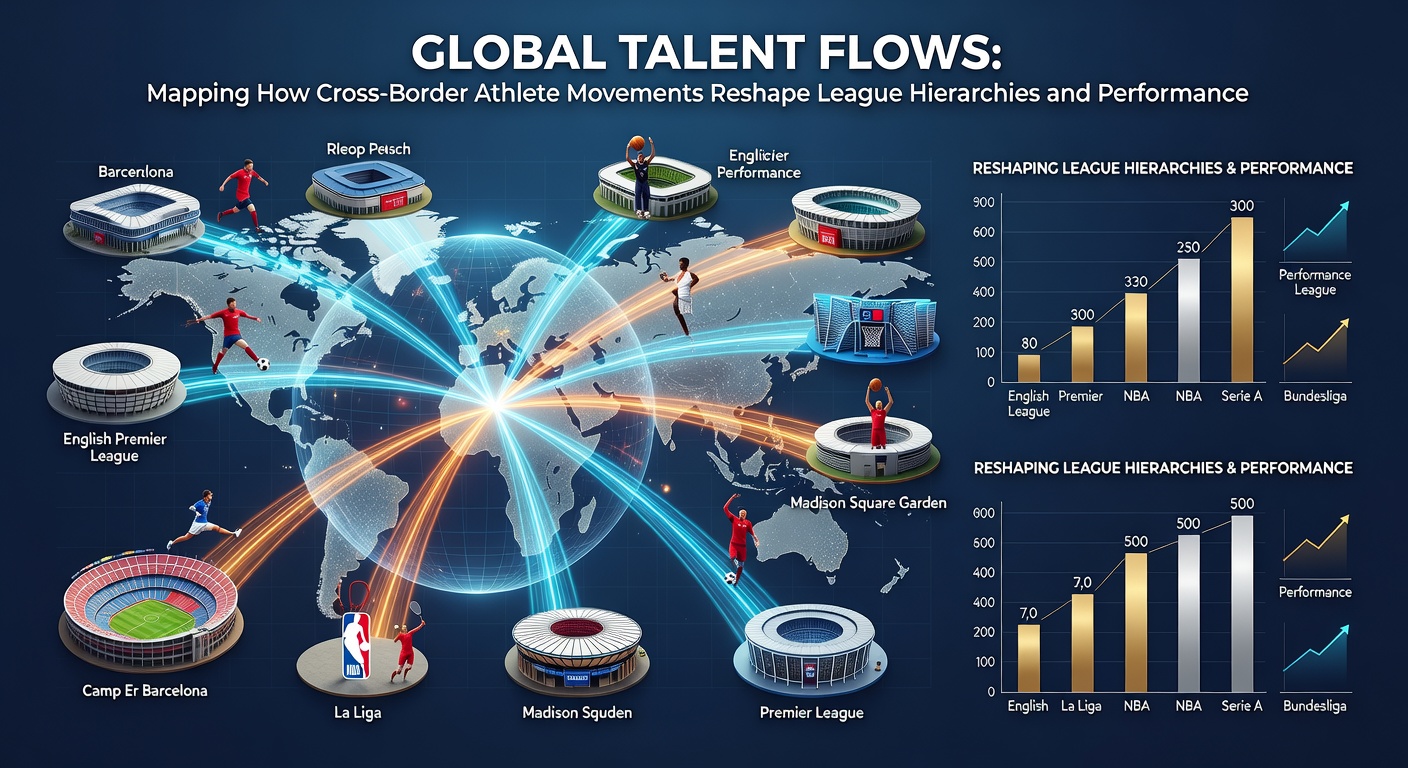
European football provides the clearest dataset on how talent migration alters hierarchy. The Premier League reported 68 percent of its players holding non-British passports during the 2025-26 season, with arrivals from Brazil, Portugal and Nigeria contributing to elevated scoring averages that reached 3.1 goals per match. Serie A and La Liga recorded similar trends, where clubs signing South American midfielders posted 12 percent higher pass completion rates than domestic-heavy squads. Transfer records maintained by FIFA indicate that fees for African forwards rose 22 percent between 2023 and 2025, correlating with improved Champions League qualification rates for clubs in the top five European associations.
Observers tracking May 2026 transfer windows note continued movement from South American domestic leagues to top-tier European sides, a pattern that has widened the points gap between leading clubs and mid-table teams by an average of 9 points over five seasons. Performance analytics platforms document that teams with at least five foreign starters achieve higher expected goal values, reshaping qualification thresholds for continental competitions.
Basketball Migration and NBA Efficiency Metrics
The NBA has documented a steady rise in international players, reaching 28 percent of rosters by the 2025-26 campaign. Players arriving from Canada, Australia, France and Serbia post above-league-average three-point percentages and defensive rating improvements according to official league tracking data. Teams that added multiple overseas contributors between 2022 and 2025 showed a 7 percent increase in regular-season win totals compared with prior years. College-to-pro pipelines from Europe now feed directly into first-round draft selections, with 14 international players chosen in the 2025 draft alone.
Performance indicators tracked by the league reveal that foreign-born players average 1.8 more assists per 36 minutes than the league median, directly influencing team offensive efficiency ratings. This influx has compressed the standings in the Eastern and Western conferences, where clubs with balanced international rosters finish within three games of each other more frequently than in previous decades.
Baseball and Ice Hockey Crossings
MLB continues to rely on talent from the Dominican Republic, Venezuela and Cuba, where 28 percent of active roster spots went to players born outside the United States and Canada in 2025. Clubs investing in Latin American academies recorded higher slugging percentages and lower earned-run averages for their pitching staffs. Data released by MLB shows that teams with five or more international position players reached the postseason at a 41 percent rate over the past four seasons, compared with 29 percent for clubs with fewer such signings.
Ice hockey follows parallel routes, with NHL rosters featuring 24 percent European-born skaters in the 2025-26 season. Swedish adn Finnish defensemen in particular post higher plus-minus figures and lower penalty minutes, shifting divisional standings for clubs in the Atlantic and Metropolitan divisions. The league’s player tracking system records that teams acquiring multiple overseas forwards improve their power-play conversion rates by 4.3 percentage points on average.
Broader Effects on Performance Indicators
Across disciplines, statistical models developed by university research groups demonstrate that clubs experiencing net positive talent inflows see measurable gains in key indicators within two seasons. Goal differentials in football, plus-minus ratings in hockey, and offensive rating in basketball all trend upward when migration volumes increase. These shifts have narrowed the competitive distance between historically dominant franchises and emerging challengers in several leagues, although top associations still capture the majority of high-value transfers.
Geographic patterns remain consistent: source regions supply athletes at younger ages while destination leagues provide advanced training environments and higher compensation structures. Tracking data through spring 2026 confirms that the volume of documented international moves has not declined despite economic pressures in several source countries.
Conclusion
Cross-border athlete movements continue to recalibrate league hierarchies and performance metrics in measurable ways across football, basketball, baseball and ice hockey. Official records and statistical databases show sustained impacts on win rates, scoring outputs and qualification outcomes, with patterns that researchers expect to persist based on current transfer trends.