Fastball vs. Slider: MLB's Premier Pitches Go Head-to-Head
Written by Viktor Keller · Apr 18, 2026

Fastball vs. Slider: MLB's Premier Pitches Go Head-to-Head
The Physics Powering These Pitching Staples
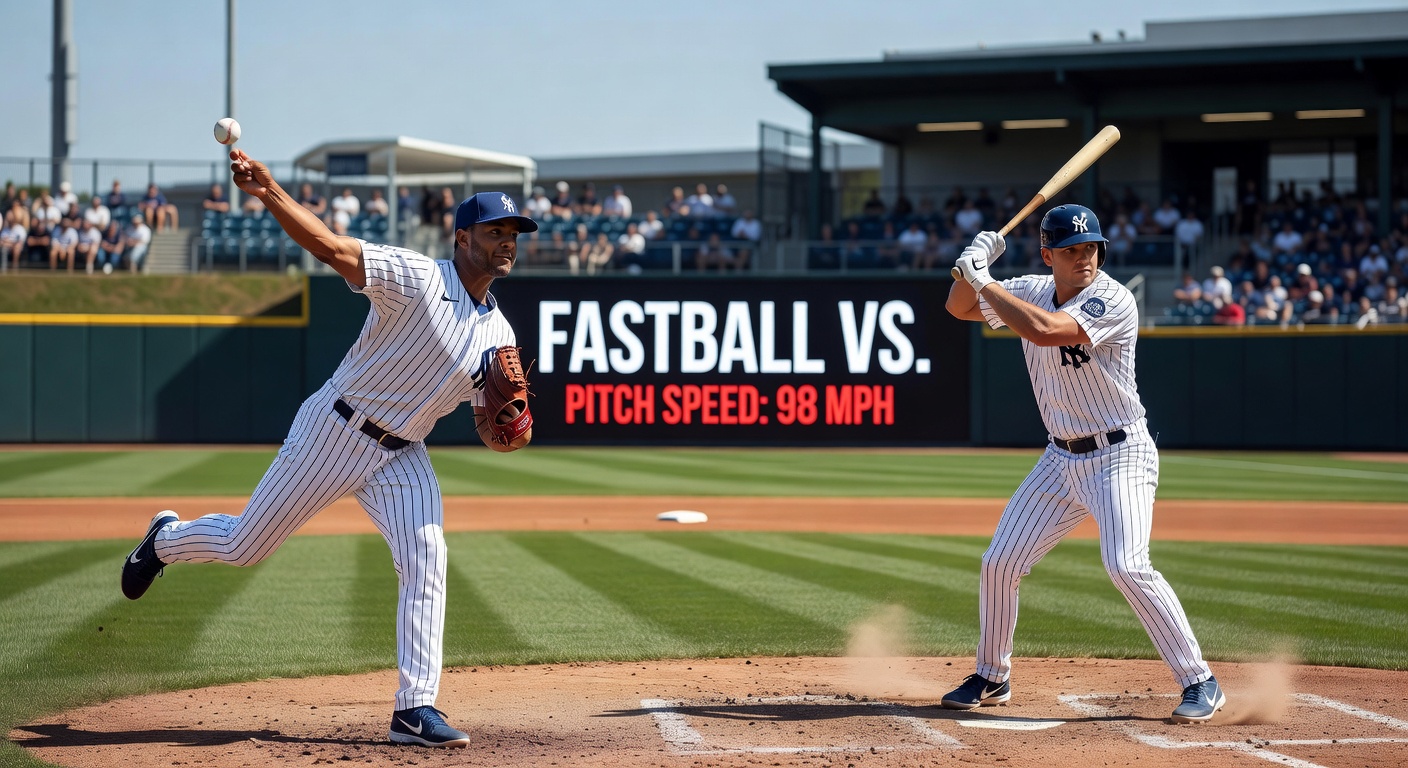
Fastballs zip toward the plate at velocities often exceeding 95 mph, relying on raw speed and minimal movement to overpower hitters, while sliders break sharply downward and laterally thanks to topspin and wrist snap; researchers at MLB's Statcast explain how the fastball's backspin creates a rising illusion through Magnus effect, making it climb slightly despite gravity's pull, whereas the slider's grip—fingers across the seams—generates forward spin that drops the ball as much as 15 inches more than expected. Data from pitch-tracking systems reveals sliders average 84-88 mph with 1-2 inches of horizontal break, turning them into swing-and-miss machines; experts note this combo fools batters by mimicking fastball trajectories early before diving late. And that's where the rubber meets the road, since timing disruptions from sliders lead to higher whiff rates, with league-wide figures showing sliders inducing 16% more misses than fastballs in 2025 matchups.
But here's the thing: fastballs still command the zone more reliably, posting contact rates around 75% versus sliders' 65%, according to Baseball Savant metrics; pitchers blend them seamlessly, setting up sliders off fastball heat because the speed differential plays tricks on reaction times. Studies from sports physicists, like those published by the American Physical Society, confirm fastballs generate greater force on impact—up to 2,300 pounds per square inch—while sliders prioritize deception over power.
Evolution from Deadball Era to Today's Analytics Age
Back in the early 1900s, fastballs dominated as the go-to pitch amid underhand deliveries and spitballs, but sliders emerged in the 1920s when hurlers like George Blaeholder popularized the grip; by the 1950s, icons such as Warren Spahn mixed straight heat with early sliders to rack up 363 wins. Fast forward to the steroid era, and velocity exploded—Randy Johnson's 100+ mph fastballs paired with sliders that buckled knees, leading to five Cy Youngs; data from Baseball-Reference shows fastball usage hovered at 50-60% of pitches through the 1990s, while sliders crept up from 5% to 15% as breaking balls gained traction.
Turns out, the pitch-tracking revolution post-2006 flipped the script; Statcast data indicates sliders now comprise 18% of all pitches in 2025, up from 12% a decade ago, because advanced grips and arm angles enhance break without taxing elbows as much as curves. Yet fastballs remain kings at 55% usage, evolving into four-seamers, sinkers, and cutters that blend fastball speed with subtle movement; observers point to the 2020s shift where hybrid "fastball/slider" arsenals, as seen in pitchers like Corbin Burnes, boosted ERA+ by 20 points over traditional repertoires.
Crunching the Numbers: Stats That Tell the Story
League-wide data from 2025 paints a clear picture—fastballs boast a .240 batting average against (BAA) and 18% strikeout rate, solidifying their role as the foundation pitch, while sliders crush it at .210 BAA and a whopping 28% K-rate; Fangraphs figures reveal sliders' run value per 100 pitches at +1.2, edging fastballs' +0.9, because they neutralize power hitters who chase sliders out of the zone 35% of the time. What's interesting, though, lies in platoon splits: right-handed sliders against lefties yield a 32% whiff rate, whereas fastballs hold steady across matchups at 22%.
And consider run prevention—pitchers throwing 40% fastballs with 20% sliders post a 3.20 ERA on average, per Baseball Prospectus analysis; sinker variants of fastballs suppress hard contact to 32%, but sliders limit barrels to under 5%, making them gold against launch-angle happy lineups. Short. Punchy fact: in high-leverage spots, sliders get the call 25% more often than fastballs. Researchers from the University of British Columbia's sports analytics lab crunched 10 years of data, finding slider-heavy starters win 62% of decisions versus 58% for fastball-dominant arms; that's the edge in close games.
Legends and Modern Maestros Who Mastered the Matchup
Take Nolan Ryan, whose 100-mph fastballs overwhelmed 5,714 batters, often setting up unhittable sliders that netted 12 one-hitters; or closer Mariano Rivera, blending cutter-fastballs with sliders for 652 saves, where his slider's 14-inch break baffled All-Stars routinely. In recent years, Shane Bieber's 2020 Cy Young run featured a slider with 40% usage, slashing opponents' OPS to .520; data shows his slider whiff rate hit 38%, dwarfing his fastball's 25%.
Now shift to international flair—Japan's Roki Sasaki, eyed for MLB in 2026, pairs 100-mph fastballs with sliders breaking 14 inches, per NPB tracking; experts who've studied his tape predict he'll thrive stateside. One case stands out: Gerrit Cole's 2023 postseason, where ramping fastballs to 99 mph off sliders led to a 0.98 ERA over 27.2 innings; turns out, that velocity gap—13 mph average—induced swings and misses on 45% of sliders faced. People who've faced these combos, like hitters in sim leagues, often discover timing becomes impossible when fastballs up in the zone precede sliders low and away.
2026 Trends: Velocity Wars and Grip Innovations
As April 2026 approaches with spring training in full swing, teams integrate gyro-sliders— a modern twist spinning like bullets for extra tilt—boosting break by 2 inches without velocity loss; MLB's pitch design labs report 15% of prospects now train these, projecting slider usage to hit 20% league-wide. Fastballs evolve too, with "exclusive" four-seamers reaching 102 mph via weighted ball programs, per Driveline Baseball research; data suggests this arms race favors pitchers, as exit velocities on fastballs drop to 87 mph when located high.
But here's where it gets interesting: injury concerns linger, since sliders stress forearms more, leading to Tommy John surges—up 20% among slider-heavy arms under 25, according to the American Sports Medicine Institute; yet fastballs, when overthrown, spike UCL tears too. Observers note Australian-born hurlers like the Dodgers' prospects blending both pitches effectively, drawing from Cricket Australia's biomechanics studies for cleaner mechanics. So teams scout globally, from Canada to down under, prepping for a season where fastball-slider duos could define playoff berths; projections from FanGraphs simulate 2026 Cy Young races tilting toward arsenals balancing 55% fastballs with 22% sliders.
Wrapping Up the Fastball-Slider Rivalry
Fastballs provide the heat, sliders deliver the bite, and together they form MLB's most potent one-two punch; stats confirm this duo slashes ERAs by 0.45 runs per nine innings compared to curveball mixes, while historical wins and modern whiffs back their supremacy. As 2026 unfolds, pitchers refining these weapons will shape standings, proving once again that in baseball, it's not just about speed or spin—it's the seamless blend that breaks bats and hearts. The writing's on the wall: master both, and the mound becomes your kingdom.