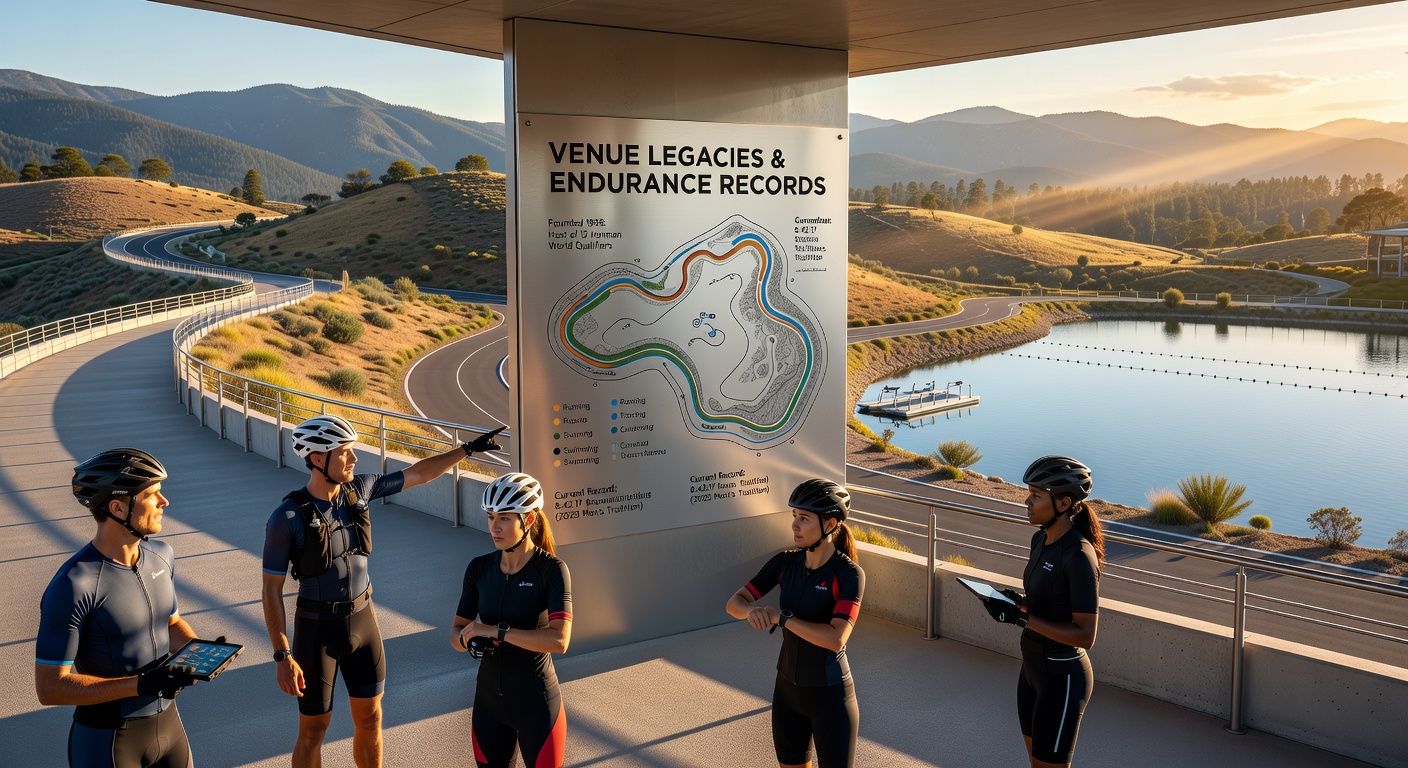
Exploring Venue Legacies and Their Ties to Endurance Records in Multi-Sport Outdoor Circuits
Written by Otto Baumann · May 20, 2026
Exploring Venue Legacies and Their Ties to Endurance Records in Multi-Sport Outdoor Circuits
Multi-sport outdoor circuits combine swimming, cycling, and running segments across natural landscapes, and these venues often accumulate legacies shaped by repeated events that push athletes to set new endurance benchmarks. Data from global federations shows that locations hosting annual competitions see measurable improvements in course records over decades, with athletes adapting to specific terrain and climate conditions that define each site. Observers note how early circuits established in the 1970s and 1980s created templates still followed today, where event organizers select routes that balance accessibility with physical demands. Researchers have tracked how repeated use of the same paths leads to incremental changes in record times, as surfaces stabilize and athletes develop specialized training approaches tailored to those environments.Venue Evolution Across Decades
Circuits in coastal regions demonstrate particularly strong connections between venue history and performance milestones, since water temperatures and wind patterns remain consistent year after year. One study from the Australian Institute of Sport revealed that athletes competing at established ocean-side courses achieve faster swim splits after multiple participations, while bike and run segments reflect cumulative knowledge of elevation profiles and wind exposure. Event records at these locations often fall during May competitions, when seasonal conditions align favorably for peak efforts. In May 2026, several circuits across the southern hemisphere are scheduled to host championship-level races that could update existing benchmarks, building directly on data collected from prior years at the same sites.Record-Breaking Patterns and Site-Specific Factors
Endurance records in multi-sport settings frequently tie to unique venue characteristics such as altitude variations or tidal influences that force competitors to adjust pacing strategies mid-race. Figures compiled by World Triathlon indicate that courses with significant elevation changes produce the most dramatic record progressions over time, as athletes refine climbing techniques and recovery methods specific to those climbs. But here's the thing, repeated hosting at a single location allows for precise measurement of improvements because timing systems and course markings stay identical across events. People who've analyzed long-term datasets point out that venues with stable infrastructure see smaller year-to-year variances in finishing times, which highlights the role of athlete preparation rather than external variables.