Draft Slot Correlations with Career Performance Metrics Across Team Sports Leagues
Written by Ines Coleman · Jul 29, 2026
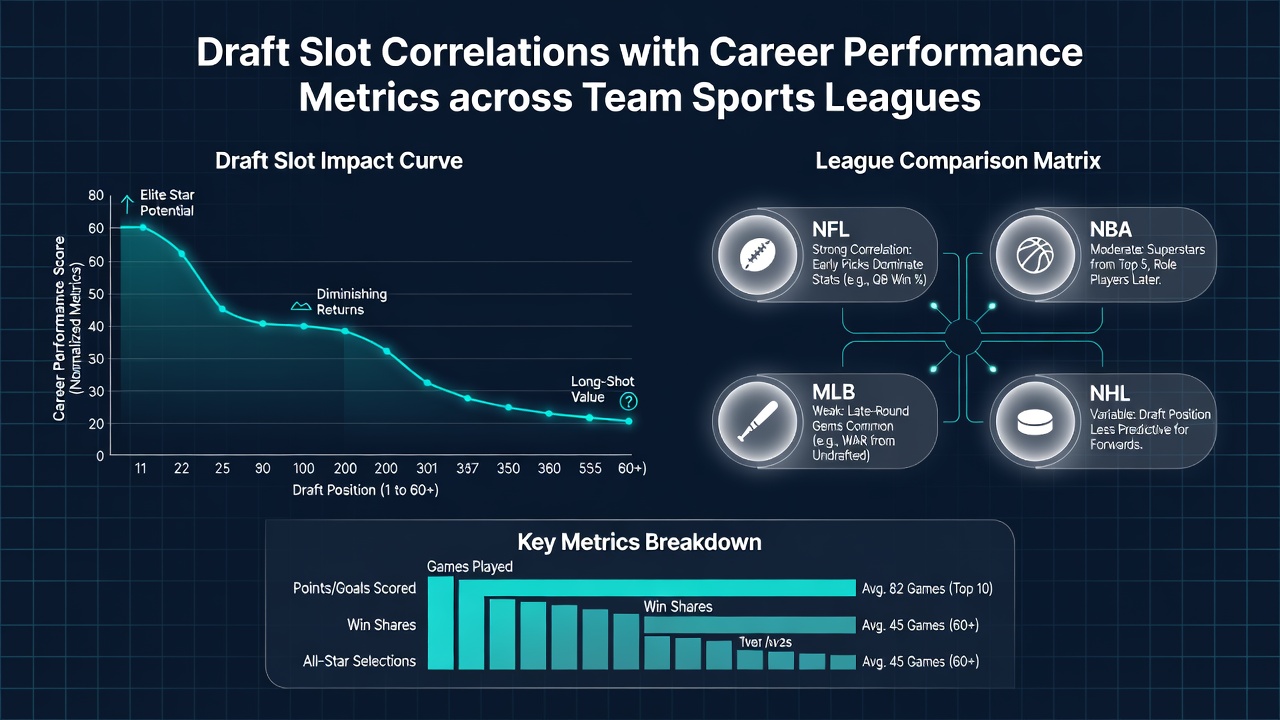
Draft Slot Correlations with Career Performance Metrics Across Team Sports Leagues
Analysts track draft slot data against career performance metrics in leagues such as the NFL, NBA, MLB, and NHL, and the patterns reveal consistent trends where early selections accumulate higher totals in games played, points scored, and advanced efficiency ratings over time. Data from multiple seasons indicate that first-round picks in the NFL generate approximately 60 percent more approximate value points than later selections according to aggregated player tracking systems, while second-day choices often produce solid starters but fewer elite contributors across a decade-long window.
Patterns in the NFL and NBA
Observers note that quarterbacks drafted in the top 10 positions in the NFL since 2000 have posted average career passer ratings above 85 when they remain with their original teams for at least four seasons, whereas those selected after pick 20 show greater variability in completion percentages and interception rates. Running backs follow a steeper decline curve, with researchers finding that selections from slots 15 through 32 average under 3,000 rushing yards in their first five years compared with over 5,000 yards for those taken in the initial 14 picks. In the NBA, point guards chosen in the lottery demonstrate elevated assist-to-turnover ratios across their first eight seasons, and shooting percentages for perimeter players correlate strongly with draft position when adjusted for minutes played per game.
Teams monitor these correlations during roster construction because early draft capital frequently translates into higher win shares and longer contract extensions, yet exceptions surface when late-round athletes exceed expectations through specialized skill sets and consistent health records. Figures reveal that NBA centers drafted outside the top 20 still accumulate rebounding totals comparable to mid-first-round peers when their teams emphasize defensive schemes that maximize interior presence.
MLB and NHL Draft Trends
Baseball organizations compile similar datasets, and studies show that position players selected in the first two rounds of the MLB draft record on-base plus slugging percentages roughly 80 points higher than those taken in rounds four through ten over full careers. Pitchers exhibit different distributions because injury rates disrupt trajectories more frequently, yet first-round arms still log higher innings totals and strikeout rates according to league-wide pitching logs. In the NHL, defensemen picked in the top 15 slots post elevated points-per-game averages in their prime years, while forwards display steadier goal-scoring consistency when they enter the league before age 20 following early selection.
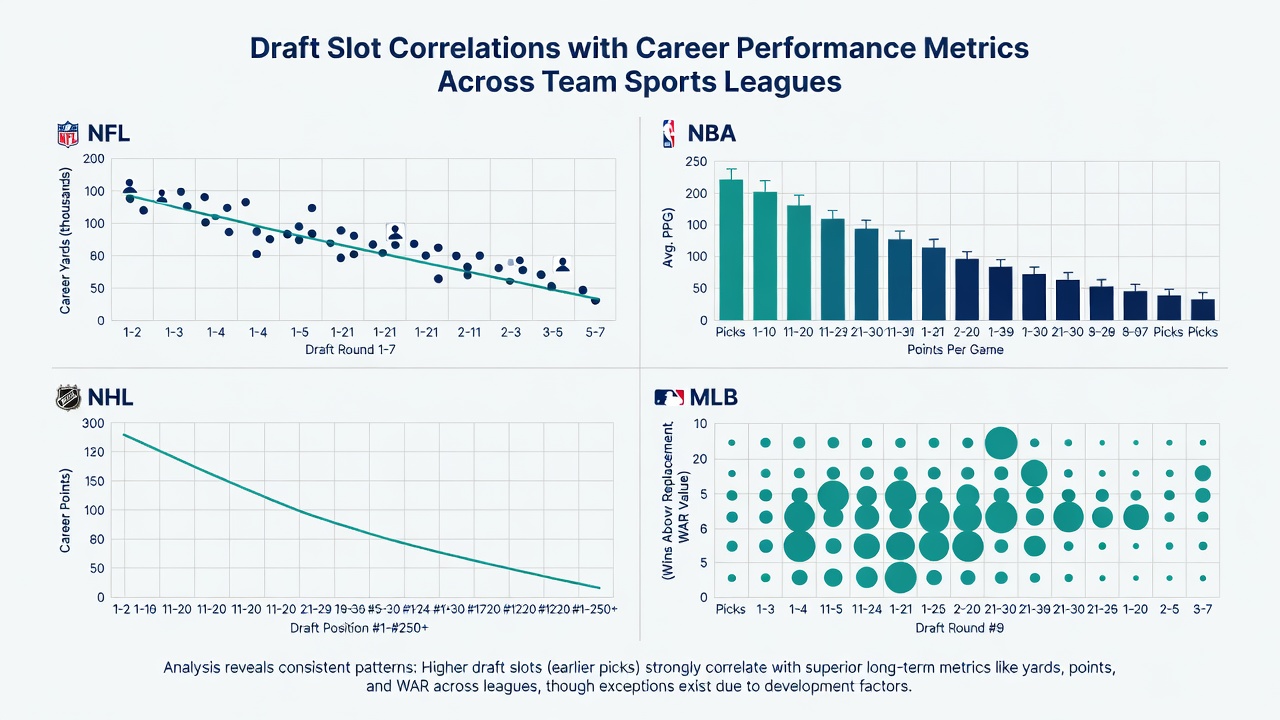
Scouts and front-office personnel review these metrics during annual draft preparation, and cross-sport comparisons highlight that leagues with longer developmental pipelines like MLB and the NHL reward patience with later selections more often than the NFL or NBA. One study from the University of Toronto's sports analytics group examined 15 years of draft data and identified that players selected between picks 31 and 60 in the NHL achieved comparable career point totals to those taken in the first 30 when ice time allocation remained consistent across multiple coaches.
Cross-League Comparisons and External Factors
Global talent flows add another layer because international players entering drafts through different pathways sometimes alter the expected performance curves, particularly in the NBA where European selections have produced above-average win shares relative to their draft slots in recent cycles. Contract structures influence retention rates as well, since teams extend qualifying offers more readily to early picks, thereby extending their measurable contributions on the field or court. Weather patterns and travel schedules affect outdoor and multi-city sports differently, but draft correlations remain stable when researchers control for these variables in regression models.
Industry reports from organizations such as the Sport Canada research division track how draft position predicts longevity metrics across professional circuits, and the findings align with league-specific databases that emphasize games played and cumulative production rather than single-season peaks. Equipment changes and rule modifications occasionally shift tactical demands, yet the underlying link between selection order and sustained output persists across decades of archived statistics.
Conclusion
Comprehensive reviews of draft slot data demonstrate measurable connections to career performance across team sports leagues, with early selections generally delivering elevated statistical aggregates while later picks contribute value through volume and specialization. Teams continue to refine evaluation models that incorporate these correlations alongside medical histories and skill assessments to optimize roster outcomes in each season.