Deciphering the Role of Pre-Season Injury Reports in Shaping Long-Term League Table Positions for European Football and North American Hockey Teams
Written by Sam Walter · Jun 22, 2026
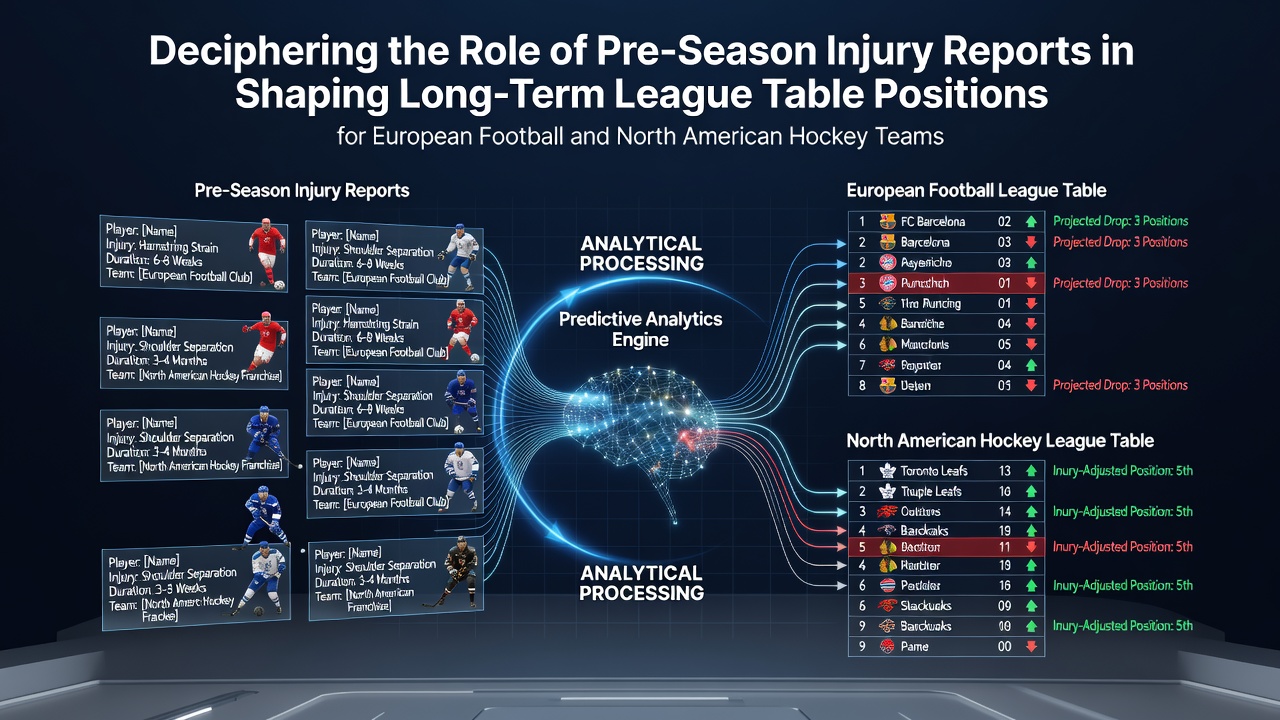
Deciphering the Role of Pre-Season Injury Reports in Shaping Long-Term League Table Positions for European Football and North American Hockey Teams
Pre-season injury reports serve as early indicators that teams in European football leagues and North American hockey circuits monitor closely because these assessments often correlate with performance trajectories over an entire campaign. Data collected during June and July training camps in 2026 continues to feed into models that track how absences at the start influence points accumulation by spring.
European Football Context
Clubs across the Premier League, Bundesliga, and Serie A compile detailed medical evaluations before the transfer window closes in late summer, and analysts note patterns where squads reporting higher numbers of soft-tissue issues in pre-season tend to drop points in the opening months. Researchers from institutions like the German Sport University Cologne have examined datasets spanning multiple seasons and found associations between early absences of key defenders or midfielders and final mid-table finishes rather than top-four placements. Teams that integrate substitute players effectively during the first ten matchdays often recover ground, whereas those without adequate depth see the effects compound through congested fixture lists.
League tables reflect these dynamics because points dropped early require greater consistency later, and statistical reviews show that clubs managing pre-season workloads to minimize non-contact injuries maintain steadier home records. Observers note that goalkeeping injuries reported before August friendlies sometimes lead to tactical adjustments that persist into winter schedules.
North American Hockey Parallels
In the NHL, pre-season medical bulletins released in September provide similar signals for organizations preparing for an 82-game regular season. Data compiled by league medical staff indicates that teams disclosing multiple upper-body concerns among forwards during training camp frequently post lower goal differentials in October and November. Canadian research groups, including those affiliated with the University of Calgary's Sport Injury Prevention Centre, have tracked how these early setbacks translate into playoff qualification rates over five-year periods.
Franchises that rotate lines to protect recovering players often stabilize their standings positions by mid-season, while those relying on short-term call-ups from the AHL experience greater variability in away performances. The 2026 pre-season reports already highlight how concussions and lower-body strains documented in June skate sessions align with reduced power-play efficiency in the opening quarter of the schedule.

Comparative Patterns Across Leagues
Both European football and North American hockey operate under different calendars yet share mechanisms where pre-season injury documentation feeds into long-term roster planning. Studies published in the British Journal of Sports Medicine reveal that the cumulative effect of multiple simultaneous absences tends to widen gaps between expected and actual league positions by February. Teams in both sports that publish transparent reports allow bettors and analysts to adjust projections accordingly, and those adjustments frequently match observed outcomes in final tables.
What's interesting is how depth charts evolve once initial reports surface, since clubs that secure targeted reinforcements before the season starts demonstrate narrower variance in results compared to those that delay action. Figures from league databases show that defensive injuries carry heavier weight in hockey because of the physical demands of checking, whereas football sees greater impact from midfield absences that disrupt build-up play.
Data Integration and League Outcomes
Statistical models used by performance analysts incorporate pre-season metrics such as training load, previous injury history, and recovery timelines to forecast table positions. Evidence from multi-season reviews indicates that squads reporting fewer than three significant injuries before competitive matches achieve higher average points per game across the full campaign. In contrast, elevated injury counts correlate with increased reliance on youth academy products, which produces mixed results depending on the age profile of the squad.
June 2026 preparations already incorporate wearable technology data that refines these reports, allowing medical teams to flag fatigue risks before they manifest in matches. Organizations that act on these flags record steadier mid-season form because rotation strategies preserve key contributors for critical stretches.
Conclusion
Pre-season injury reports therefore function as foundational inputs that shape strategic decisions affecting final league standings in both European football and North American hockey. The documented correlations between early absences and long-term point totals underscore why teams prioritize medical transparency and proactive squad management throughout the calendar year.