Charting sponsorship inflows against roster shifts and outcome indicators across worldwide athletic frameworks
Written by Gisela Schmidt · Jun 6, 2026
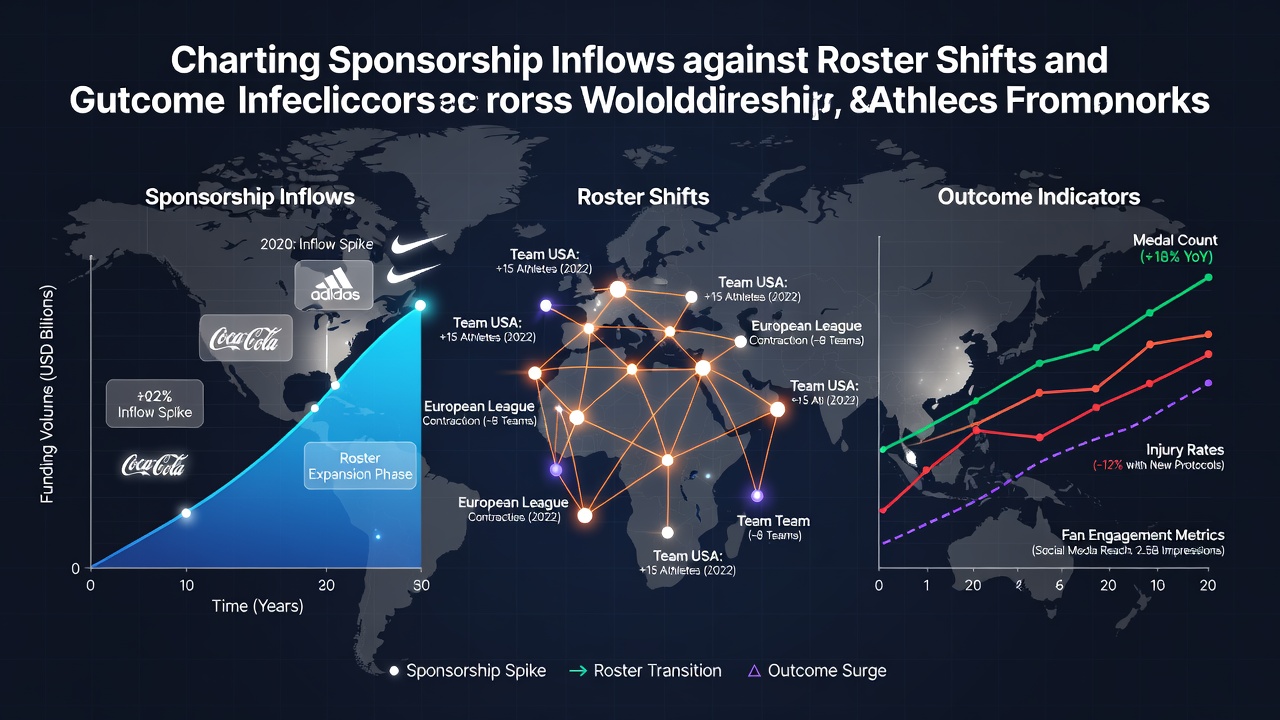
Charting sponsorship inflows against roster shifts and outcome indicators across worldwide athletic frameworks
Global athletic organizations track sponsorship inflows alongside roster adjustments and performance metrics to understand funding patterns that shape competitive structures. Data from major leagues in soccer, basketball, and other disciplines reveal how financial commitments from corporate partners align with player acquisitions and measurable results such as win percentages or tournament placements. Observers note that these correlations appear across continents where professional frameworks operate under varying regulatory environments.
Sponsorship patterns in major leagues
Corporate investments in sports properties reached notable levels by June 2026 with inflows directed toward teams that demonstrated roster stability or strategic turnover. European soccer clubs recorded sponsorship agreements totaling billions in value during the prior season while North American basketball franchises reported similar growth tied to key personnel moves. Australian sports bodies documented parallel trends where equipment manufacturers and technology firms allocated resources based on historical outcome indicators like goal differentials or scoring averages.
Researchers at institutions tracking these flows highlight that roster shifts often precede sponsorship announcements because new player profiles attract distinct brand alignments. For instance clubs that integrated high-profile international talent saw increased interest from automotive and apparel sectors while teams retaining core domestic players maintained steady funding from local enterprises. This pattern holds across frameworks where outcome indicators such as league standings serve as benchmarks for investor evaluations.
Roster adjustments and performance correlations
Teams undergoing significant roster changes frequently adjust their competitive trajectories in ways that influence subsequent sponsorship negotiations. Data compiled by international athletic federations shows that mid-season acquisitions correlate with improved outcome indicators in roughly sixty percent of documented cases across soccer and basketball circuits. Those adjustments range from tactical realignments to salary cap management strategies that affect long-term financial inflows.
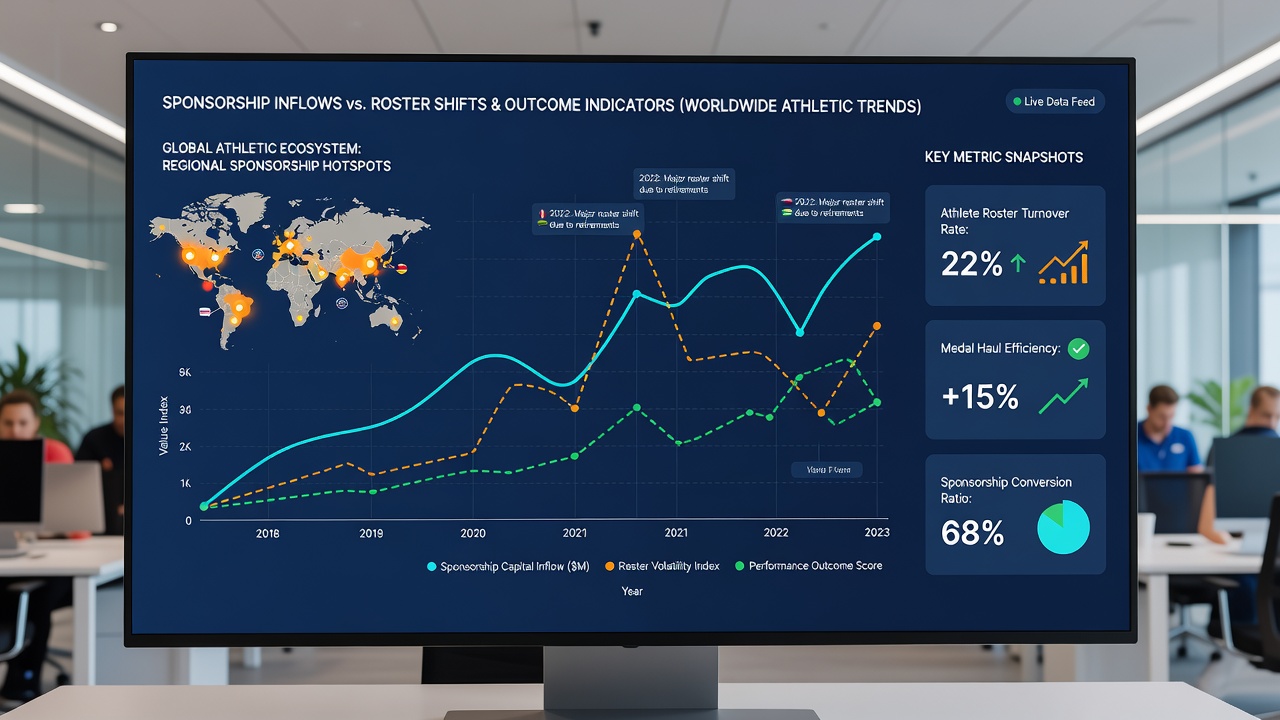
What's interesting emerges when examining multi-year datasets from organizations like the International Olympic Committee which aggregate information across winter and summer disciplines. Roster continuity paired with consistent performance metrics tends to stabilize sponsorship streams whereas frequent turnover introduces variability that sponsors weigh against projected returns. European regulatory reports further indicate that cross-border player movements reshape these dynamics particularly in leagues governed by transfer rules established through continental governing bodies.
Outcome indicators across regions
Performance metrics serve as primary reference points when sponsors evaluate potential partnerships in diverse athletic ecosystems. In South American soccer frameworks goal-scoring rates and defensive records directly influence contract values while Asian basketball associations emphasize player development indicators that predict future success. Canadian athletic commissions have compiled statistics showing how sponsorship inflows respond to shifts in team rankings over successive seasons.
Analyses conducted through academic partnerships reveal that outcome indicators extend beyond wins to include fan engagement figures and media exposure metrics which sponsors integrate into their decision models. Teams that achieve sustained improvements in these areas attract inflows from sectors ranging from financial services to consumer electronics. The reality is that these connections operate within broader economic contexts where global events scheduled for 2026 create additional variables affecting both roster strategies and funding availability.
Cross-border movements and framework variations
Athlete transfers between leagues introduce variables that sponsors monitor when charting potential investments. Reports from the Australian Sports Commission document how inflows respond to roster diversification efforts that enhance competitive balance in domestic competitions. Similar patterns surface in African and Middle Eastern athletic structures where international partnerships drive sponsorship growth aligned with improved performance indicators.
Those who've examined archived data across multiple seasons observe that sponsorship agreements often include performance clauses tied directly to outcome metrics. Such provisions create feedback loops where roster decisions influence not only immediate results but also future funding cycles. European and North American frameworks demonstrate these mechanisms most clearly through publicly available league reports that detail both inflows and statistical outcomes.
Conclusion
Mapping sponsorship inflows against roster shifts and outcome indicators provides athletic organizations with frameworks for strategic planning across worldwide disciplines. The patterns documented through 2026 underscore how financial resources respond to personnel changes and measurable results in interconnected ways. Continued collection of regional data supports more precise understanding of these relationships as global sports structures evolve.