Altitude Variations Reshaping Scoring Averages and Record Benchmarks in Elevated Professional Venues
Written by Gisela Schmidt · Jul 1, 2026

Altitude Variations Reshaping Scoring Averages and Record Benchmarks in Elevated Professional Venues
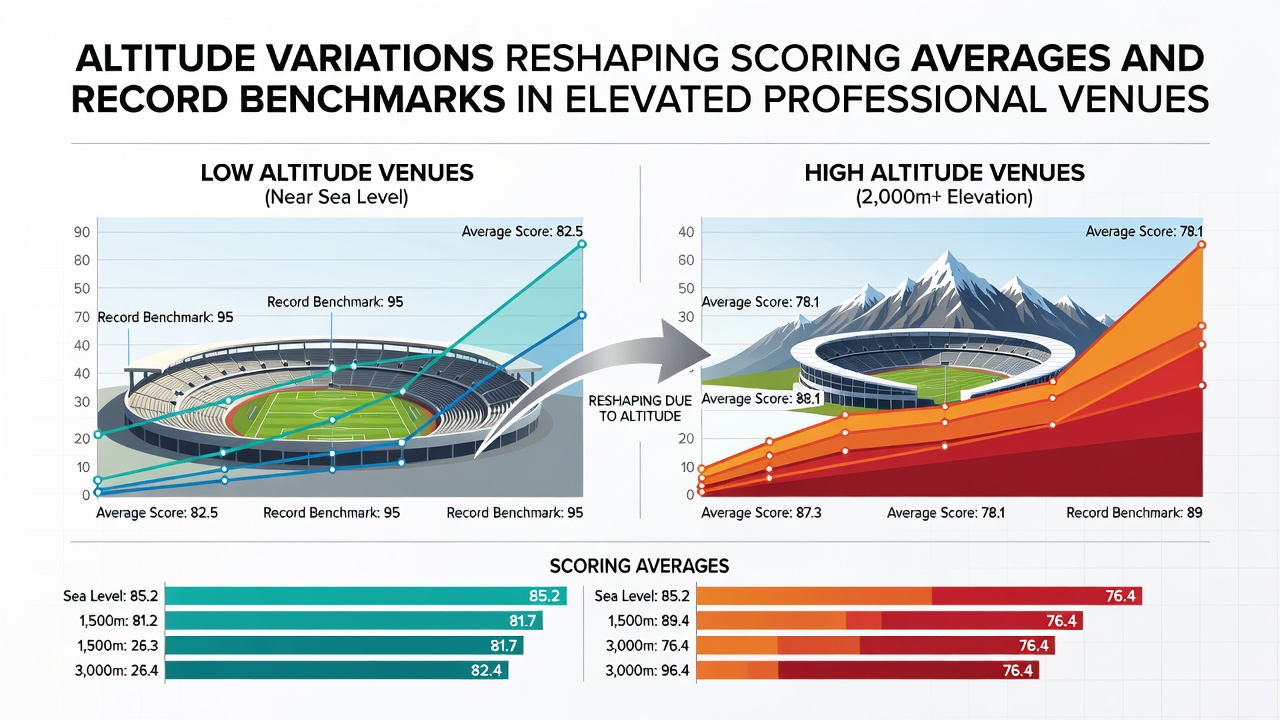
Professional sports venues situated at significant elevations create measurable shifts in performance metrics, and observers note that thinner air density directly alters ball trajectories while affecting athlete endurance levels across multiple disciplines. Data from leagues operating in such locations shows consistent patterns where scoring averages rise in certain sports yet decline in others due to physiological demands, and researchers have tracked these changes through decades of statistical records that now redefine what constitutes a benchmark achievement.
Physical Mechanisms Driving Performance Changes
Atmospheric pressure drops at higher elevations which reduces air resistance on projectiles, and this allows baseballs or soccer balls to maintain velocity over longer distances while also accelerating the rate at which they travel through the strike zone or across goal lines. Studies conducted by institutions in the Americas have quantified these effects, and one analysis from the University of Colorado Boulder demonstrated that a baseball hit at 5,280 feet experiences approximately 10 percent less drag compared to sea-level conditions, which translates into extended flight paths that boost home run frequencies in affected parks. Endurance events reveal contrasting trends because athletes process oxygen less efficiently in reduced air density, leading teams to adjust training regimens and substitution patterns during matches played at altitude.
Baseball Records at Iconic Elevated Parks
Coors Field in Denver stands as the primary example where MLB scoring averages have remained elevated since the stadium opened in 1995, and franchise data reveals that teams playing there post offensive outputs roughly 20 percent above league norms during regular season games. Pitchers adapt by relying more on breaking balls that retain sharper movement despite the thinner atmosphere, yet overall earned run averages climb as fly balls clear fences at rates unseen at lower venues. Historical comparisons show that single-season home run totals from players stationed in Colorado often set franchise marks, and analysts continue to monitor how these venue-specific advantages influence award voting and contract negotiations throughout each campaign, including developments unfolding in the 2026 season where early July figures already indicated continued upward pressure on offensive benchmarks.
Soccer Dynamics in Andean Competition Venues
Estadio Hernando Siles in La Paz, Bolivia sits above 3,600 meters and forces visiting clubs to confront rapid fatigue that alters tactical approaches during CONMEBOL fixtures, and match statistics compiled by regional governing bodies indicate that home sides maintain possession advantages partly because opponents tire faster in the low-oxygen environment. Ball movement changes as well since the reduced drag permits longer passes and shots that dip less dramatically, which has prompted coaches to emphasize set-piece strategies that capitalize on these physics. Performance indicators tracked across multiple Copa Libertadores campaigns demonstrate that scoring rates fluctuate based on acclimatization periods, and teams arriving from sea-level nations often record lower goal outputs until they complete several days of altitude-specific preparation routines.
Basketball and Emerging Trends in Multi-Sport Circuits
Indoor venues at elevation such as those used by NBA franchises in Utah produce subtler effects because climate control mitigates some atmospheric variables, yet player recovery metrics still show measurable declines during back-to-back games at altitude according to league health monitoring programs. Data collected through wearable technology indicates that heart rate responses increase during high-intensity bursts, which influences substitution patterns and ultimately shapes fourth-quarter scoring distributions in affected matchups. Observers tracking international circuits note that similar patterns appear in rugby and cricket events staged in elevated regions of South Africa and Australia, where governing organizations have begun integrating altitude compensation factors into performance modeling software used for record verification processes.
Adjustments Across Training and Equipment Standards
Leagues and federations respond to these venue characteristics by updating preparation protocols, and clubs now incorporate simulated altitude chambers during off-season work while manufacturers refine ball constructions to balance flight consistency across elevation gradients. Records established in these environments undergo additional scrutiny during verification stages, and committees compare raw statistics against normalized models that account for air density variables before certifying new benchmarks. Figures from ongoing 2026 competitions illustrate how teams that invest in specialized recovery resources sustain competitive edges, and statistical agencies continue to refine algorithms that isolate altitude contributions from other performance drivers.
Conclusion
Elevated professional venues continue to generate distinct statistical signatures that reshape expectations for scoring averages and record benchmarks across baseball, soccer, and additional sports, and ongoing data collection ensures that future comparisons reflect these physical realities rather than treating all locations as equivalent. Organizations maintain detailed archives that support accurate historical context while athletes and support staff refine methods that mitigate or exploit the conditions present at each site.